






 React Native Development
 Angularjs 2 Development
 Angularjs Development
 Nodejs Development
Piccosoft

Picco Labs
Picco AI
Piccosoft
Blogs
Showcases blog posts as Entries, grouped into categories like Lifestyle, Technology, or Travel. Each blog uChannel for blog templatesses a Blog Template for engaging and readable layouts.
Managing databases efficiently is a crucial part of any backend development process. Traditionally, developers had to write raw SQL queries to interact with databases, which often led to complex, repetitive code. With the rise of modern frameworks, Object-Relational Mappers (ORMs) have simplified database management. TypeORM is one such ORM designed for Node.js and TypeScript applications, making database operations more structured and easier to maintain. What Makes TypeORM Stand Out? TypeORM is widely used in enterprise applications because it provides a clean and scalable way to work with databases. Some of its key benefits include: Simplified Database Management — Developers can define database structures using TypeScript classes instead of writing SQL. Support for Multiple Databases — Works with MySQL, PostgreSQL, SQLite, MongoDB, and other relational databases. Automatic Schema Synchronization — Handles database structure changes efficiently, reducing manual work. Better Code Maintainability — Makes code more readable and reusable, improving overall development speed. How TypeORM Helps in Scalable Applications For businesses that rely on scalable applications, database efficiency is critical. TypeORM ensures that data handling remains smooth as applications grow in complexity. Features like query builders, transaction management, and automatic migrations allow developers to manage large datasets without performance bottlenecks. At Piccosoft, where we build high-performance applications, TypeORM plays a key role in ensuring structured and maintainable database interactions. It enables us to develop robust solutions faster, while maintaining flexibility in how we structure and retrieve data. Why Businesses Should Consider TypeORM For companies developing modern web applications, TypeORM reduces the dependency on raw SQL and minimizes human errors in database management. Its integration with TypeScript provides additional benefits, such as type safety and better tooling support. This leads to fewer bugs, improved collaboration between developers, and faster time-to-market for new features. Whether you’re building a small-scale application or a large enterprise system, TypeORM simplifies database interactions, making development more efficient and scalable.
Continue reading »
Software testing plays a crucial role in the development process, ensuring that applications work as intended before being released to users. Different types of tests are designed to verify various aspects of functionality, reliability, and performance. In this article, we will explore the key testing types, including unit tests, integration tests, smoke tests, regression tests, acceptance tests, system tests, and pre-flight checks. Unit Testing: The Foundation of Reliable Code Unit testing is the most fundamental level of testing, focusing on individual methods or functions within a system. These tests verify that each small component of an application behaves correctly in isolation. The scope of a unit test is narrow, covering only one function at a time, with all dependencies stubbed or mocked. Unit tests are crucial for catching bugs early in the development cycle. Since they run quickly and are easy to automate, they are often included in continuous integration pipelines. Developers rely on unit tests to ensure that their code changes do not introduce new issues at the most basic level. Integration Testing: Ensuring Components Work Together While unit tests focus on individual functions, integration tests verify that multiple components of a system interact correctly. These tests ensure that different modules, databases, APIs, or third-party services work together as expected. Integration tests vary in complexity, ranging from checking the interaction between two classes to verifying the entire workflow of an application. They play a crucial role in identifying issues that arise due to miscommunication between different parts of a system. For example, an integration test could validate that a web application can fetch user details from a database and display them correctly on a user profile page. Unlike unit tests, integration tests often involve real data and external services. Smoke Testing: A Quick Health Check for the System Smoke testing, also known as a sanity check, is a high-level test that determines whether a software application is stable enough for further testing. The term originates from hardware testing, where powering up a circuit and checking for smoke indicates a critical failure. A smoke test ensures that the basic functionalities of an application are working. If the system fails this test, more detailed testing is unnecessary until the core issues are fixed. Smoke tests are typically performed after a new build is deployed to a staging environment, verifying that the system does not crash immediately when started. For instance, a smoke test on an eCommerce application might verify that the homepage loads, users can log in, and the checkout process functions at a basic level. Regression Testing: Preventing Old Bugs from Returning Regression testing is performed to ensure that new changes or updates do not break previously working functionality. Whenever a bug is fixed or a new feature is introduced, regression tests confirm that existing features still behave as expected. Regression tests are particularly important in large applications where multiple components interact. A small change in one part of the system could have unintended consequences elsewhere. These tests are often automated, running periodically to detect any unexpected changes in behavior. For example, after fixing a pricing bug in an online store, a regression test might verify that the prices displayed to customers remain correct across different product categories. Acceptance Testing: Validating Business Requirements Acceptance testing ensures that a feature or a complete application meets business and user requirements. These tests focus on the expected outcomes rather than the technical details of the implementation. Unlike unit and integration tests, which are more developer-focused, acceptance tests validate whether a feature aligns with user expectations. If a feature passes acceptance testing, it is deemed ready for release. For instance, an acceptance test for a flight booking system would check that a user can successfully search for flights, select a seat, and complete the booking process. System Testing: Evaluating the Application as a Whole System testing is a comprehensive process that tests the entire application as a black box. It assesses the system’s behavior as a whole, rather than focusing on individual components. This includes checking the software’s performance, security, and compatibility across different devices and operating systems. System testing is often performed in a controlled environment where dependencies are either mocked or controlled to isolate issues effectively. Unlike integration testing, which focuses on the interaction between subsystems, system testing evaluates the entire product. For example, a system test on a banking application would verify that users can log in, transfer money, check account balances, and receive notifications, all while ensuring security and data integrity. Pre-Flight Checks: Ensuring Deployment Readiness Pre-flight checks are conducted in a production-like environment to confirm that the software is ready for deployment. These tests mitigate the risk of deployment failures by catching last-minute issues that might not have been apparent in previous test stages. Pre-flight checks can include running smoke tests, performance tests, and end-to-end acceptance tests in a staging environment. This process ensures that the software behaves as expected before going live. For example, an online news website might conduct a pre-flight check to verify that new articles are correctly indexed in search engines, user comments are functional, and site performance is stable under high traffic. Conclusion Each type of software test serves a unique purpose in ensuring software quality. Unit tests validate individual functions, integration tests verify interdependencies, smoke tests confirm stability, and regression tests prevent old issues from reappearing. Acceptance tests ensure that features meet business requirements, system tests evaluate the entire application, and pre-flight checks ensure deployment readiness. By implementing a well-rounded testing strategy, development teams can build reliable, scalable, and high-quality software. At Piccosoft , we emphasize robust testing methodologies to ensure that our software solutions meet the highest standards. Understanding and applying these different types of testing can help teams reduce bugs, improve performance, and deliver seamless user experiences.

In the dynamic world of web development, simplicity, flexibility, and performance are key factors in choosing the right technology. For developers building server-side applications with Node.js, Express.js has emerged as one of the most popular frameworks. Its minimalistic design and robust features make it a preferred choice for both beginners and experienced developers. What is Express.js? Express.js is a fast, unopinionated, and minimalist web framework for Node.js. It provides a flexible set of features for web and mobile applications, allowing developers to create robust APIs and dynamic web apps effortlessly. Being lightweight, it enables developers to have full control over their application architecture while providing the tools needed for rapid development. Key Features of Express.js Middleware Support Middleware functions are a core aspect of Express.js, allowing developers to execute code, make changes to the request and response objects, and terminate the request-response cycle. This modular approach enhances application scalability. Routing Express.js offers a robust routing mechanism for defining application endpoints. Its routing system helps organize an app’s flow efficiently, making it easier to handle complex requests and responses. Template Engine Integration Express.js integrates seamlessly with popular template engines like Pug, EJS, and Handlebars, enabling developers to dynamically generate HTML content. Error Handling Error handling in Express.js is simple and efficient. Developers can use built-in middleware or create custom error-handling logic for smooth debugging and app maintenance. Asynchronous Programming Leveraging Node.js’s non-blocking I/O model, Express.js handles multiple requests simultaneously, ensuring high performance and responsiveness. Extensive Ecosystem Express.js boasts a large ecosystem of plugins and middleware. Developers can easily extend the framework’s capabilities by integrating third-party libraries. Use Cases of Express.js RESTful APIs Express.js is widely used to build REST APIs. Its lightweight architecture and middleware make it an excellent choice for creating scalable and maintainable APIs. Web Applications From simple web apps to complex, full-stack applications, Express.js supports a wide range of projects. When paired with frontend frameworks like React, Angular, or Vue.js, it becomes a powerful tool for modern web development. Real-Time Applications Express.js, in conjunction with libraries like Socket.io, is perfect for building real-time apps such as chat platforms and collaborative tools. Microservices Express.js is well-suited for developing microservices due to its simplicity and ability to handle asynchronous requests efficiently. Why Developers Love Express.js Speed and Simplicity: Express.js’s straightforward API and unopinionated nature allow developers to build applications quickly. Flexibility: It provides the freedom to structure applications in various ways, catering to the needs of diverse projects. Community Support: Being one of the most widely used Node.js frameworks, Express.js has an active and growing community. Developers can access a wealth of tutorials, plugins, and resources to enhance their projects. Conclusion At Piccosoft , we understand the importance of choosing the right technologies to develop scalable and efficient solutions for businesses. Express.js plays a pivotal role in many of our Node.js-based projects, helping us deliver robust backend solutions for web and mobile applications. By leveraging Express.js, we ensure that our applications are not only high-performing but also flexible enough to meet the unique needs of our clients. Whether it’s developing RESTful APIs, implementing microservices, or creating real-time applications, our team at Piccosoft is well-versed in utilizing Express.js to its fullest potential. If you’re looking for a technology partner to bring your vision to life, Piccosoft’s expertise in Express.js and other cutting-edge frameworks ensures that your project is in capable hands. Let’s collaborate to build solutions that empower your business to thrive in the digital age.
In Japan, the beauty industry is leading the way in combating counterfeits in online marketplaces. With the rise of fake products, particularly in cosmetics, companies have turned to advanced technologies like blockchain, QR codes, and NFC tags to ensure product authenticity and gain consumer trust. These measures address a global challenge — how to provide buyers with confidence that what they purchase online is genuine. Inspired by Japan’s innovative strategies, businesses worldwide are exploring blockchain’s potential to revolutionize eCommerce by ensuring transparency and protecting brand integrity. The Rising Importance of Product Authenticity in eCommerce Counterfeit products pose a significant threat to online marketplaces, particularly in industries like beauty, luxury goods, and electronics. These fake goods not only harm consumers but also tarnish the reputations of trusted brands. According to a study by the Organisation for Economic Co-operation and Development (OECD) and the European Union Intellectual Property Office (EUIPO), a significant percentage of online shoppers hesitate to purchase from e-commerce platforms due to concerns about product authenticity. This highlights the urgent need for robust systems that can verify the origin and quality of products. T ransparency: A Key to Building Trust In the competitive landscape of e-commerce, transparency is no longer optional — it’s a necessity. Today’s consumers demand detailed information about the products they buy, including sourcing, manufacturing, and authenticity verification. Transparency not only helps combat counterfeiting but also fosters deeper customer loyalty, as consumers are more likely to trust brands that prioritize openness. How Blockchain Addresses These Challenges Blockchain technology has emerged as a game-changer in the fight against counterfeit products in e-commerce. By creating immutable, tamper-proof digital records for every product, blockchain enables businesses to offer unparalleled levels of transparency and authenticity. Here’s how it works: Traceability: Blockchain tracks the journey of a product from its origin to the consumer, providing an unalterable record that buyers can trust. Verification: Features like QR codes and NFC tags allow customers to instantly verify the authenticity of a product by scanning its unique identifier. Security: Blockchain’s decentralized nature ensures that data cannot be altered or deleted, safeguarding the integrity of product information. Benefits of Blockchain for eCommerce Platforms Integrating blockchain technology into e-commerce platforms can bring several key benefits: Enhanced Consumer Confidence: Transparent product information builds trust and encourages repeat purchases. Supply Chain Optimization: Blockchain streamlines processes by providing real-time data across the supply chain. Fraud Prevention: Immutable blockchain records make it nearly impossible for counterfeiters to infiltrate the market. Sustainability: Blockchain can also track ethical and sustainable sourcing, meeting consumer demands for eco-friendly practices. The Future of eCommerce: Building a Trust-Centric Marketplace As consumer expectations continue to evolve, the adoption of blockchain technology in e-commerce is poised to reshape the industry. By ensuring product authenticity and transparency, blockchain creates a trust-centric marketplace that benefits both businesses and consumers. While premium brands are currently leading the way in adopting blockchain, affordable and scalable solutions are making this technology accessible to smaller businesses as well. Piccosoft: Your Partner in Blockchain Integration At Piccosoft Software Labs India (P) Limited, we specialize in empowering e-commerce and quick commerce platforms with cutting-edge blockchain solutions. Our team of experts can help you: Implement blockchain to ensure product traceability and authenticity. Integrate QR codes and NFC tags for seamless customer verification. Design custom blockchain systems tailored to your business needs. By partnering with Piccosoft , businesses can leverage blockchain technology to enhance transparency, prevent counterfeiting, and build lasting trust with their customers. Let us help you create a marketplace where trust drives every transaction.
Redis, short for Remote Dictionary Server, is a highly performant, open-source, in-memory data structure store. Designed for speed and versatility, Redis has evolved into one of the most popular databases for modern applications, thanks to its ability to handle diverse workloads with low latency. Key Features That Set Redis Apart Blazing Speed with In-Memory Storage Redis stores data in memory, enabling sub-millisecond read and write operations. This makes it a favourite choice for real-time applications like gaming leaderboards, live-stream analytics, and interactive dashboards. Rich Data Structures Redis supports an array of data types, including: Strings for simple key-value storage. Lists for ordered data sequences. Hashes for field-value mapping. Sets and Sorted Sets for unique collections with ranking capabilities. These versatile structures empower developers to design efficient solutions tailored to their needs. Persistence for Reliability While Redis excels in in-memory operations, it also offers data persistence through snapshotting and append-only file (AOF) mechanisms, ensuring durability and recovery in case of failures. High Availability and Scalability Redis supports clustering and replication, allowing for horizontal scaling and data redundancy. With automatic data partitioning, it ensures continuous uptime even during heavy workloads. Extendable with Modules Redis’s modular architecture allows developers to enhance its core functionality with specialized tools like: RedisJSON for JSON document storage. RedisGraph for graph-based queries. RedisTimeSeries for time-stamped data analysis. AI-Ready with Vector Search Redis stays at the forefront of modern technology by incorporating vector search capabilities. This feature is pivotal for building real-time AI applications such as chatbots, recommendation systems, and semantic search engines. Use Cases for Redis Caching: Redis accelerates applications by storing frequently accessed data for immediate retrieval. Session Management: Its low-latency nature makes it ideal for managing user sessions in web applications. Real-Time Analytics: Businesses leverage Redis for live dashboards, tracking key metrics in real time. Pub/Sub Messaging: Redis enables seamless communication in distributed systems through its publish/subscribe mechanism. AI Workloads: With features like semantic caching and vector search, Redis is revolutionizing AI-based application development. Redis and Piccosoft: A Shared Vision for Innovation At Piccosoft , we harness the power of Redis to build scalable, real-time applications tailored to diverse industry needs. Our solutions leverage Redis’s unmatched performance and flexibility to deliver transformative outcomes, from e-commerce platforms with blazing-fast search capabilities to AI-driven analytics systems. By combining Redis’s potential with Piccosoft’s expertise, we empower businesses to achieve seamless performance, scalability, and innovation in their digital journeys. Redis’s role as a cornerstone of modern application architecture aligns perfectly with Piccosoft’s commitment to developing cutting-edge solutions for a fast-evolving world. Together, we’re shaping the future of real-time applications.
MORE BLOGS

12 Dec 2024 , 02:00 PM
Understanding GraphQL APIs: A Modern Approach to Data Fetching
In the world of web development, APIs are crucial for data interaction between clients and servers. While REST APIs have been the standard for many years, GraphQL has emerged as a more flexible and efficient alternative, transforming how applications fetch and manage data. What is GraphQL? GraphQL, developed by Facebook, is a query language for APIs that allows clients to request exactly the data they need. Unlike REST, which typically requires multiple endpoints for different data needs, GraphQL enables fetching all required data through a single endpoint. This helps avoid problems like over-fetching or under-fetching of data. Key Features of GraphQL Single Endpoint GraphQL operates through a single endpoint, simplifying API management and reducing the need for multiple, complex endpoints. Declarative Data Fetching Clients can request specific fields of data, reducing the load on both the client and server by fetching only the necessary information. Real-Time Updates with Subscriptions Subscriptions in GraphQL allow clients to receive real-time updates when data changes, which is useful for building applications that require live data, like messaging apps or stock market feeds. Schema-Driven Development GraphQL APIs are defined by a schema, which makes it easy for both the front-end and back-end teams to understand and interact with the data structure. Version-Free Evolution Instead of versioning APIs by creating new endpoints, GraphQL APIs evolve by adding new fields and types, ensuring backward compatibility. Advantages of GraphQL Efficiency in Data Fetching Unlike REST, where multiple requests are often required to fetch related data, GraphQL allows clients to request everything they need in one query, improving efficiency. Flexibility for Developers GraphQL’s flexibility allows developers to avoid over-fetching or under-fetching data, streamlining the development process and improving app performance. Enhanced Front-End Experience Front-end developers have full control over the data they need, enabling faster iteration and a more dynamic user experience. Real-Time Data With GraphQL subscriptions, developers can implement features that update the UI in real time based on data changes, enhancing interactivity. Implementing GraphQL in Projects When integrating GraphQL into a project, developers focus on defining a clear and structured schema to ensure both flexibility and efficiency. A well-designed schema helps to keep the data consistent and maintainable, which is crucial for scaling the application. For example, in a project where multiple data sources are integrated (such as a multi-vendor e-commerce platform), GraphQL can simplify the process of aggregating data and presenting it in a single response. This reduces the need for multiple API calls and minimizes the overhead on the server. Challenges and Best Practices Complex Schema Design Designing a comprehensive GraphQL schema can be challenging, especially for large-scale applications. Breaking down the schema into smaller, modular parts can help manage complexity. Performance Considerations Although GraphQL improves efficiency, complex queries can still strain the server. Tools like query optimization, limiting the depth of queries, and rate-limiting can help mitigate performance issues. Caching Unlike REST APIs, which can be cached easily, GraphQL requires custom solutions for caching. Using tools like Apollo Client or DataLoader can help improve caching and reduce redundant queries. Conclusion GraphQL offers a powerful alternative to traditional REST APIs, providing developers with more control over data fetching and offering a more efficient, flexible way to handle complex data requirements. While there are challenges in implementing GraphQL, its benefits in terms of performance, real-time data handling, and flexible data management make it an attractive choice for modern applications. As the web continues to evolve, GraphQL is likely to remain a core technology for building high-performance, scalable applications. At Piccosoft , we recognize the potential of GraphQL in addressing the evolving needs of application development. By integrating it into our projects, we aim to provide scalable, efficient solutions tailored to the specific requirements of our clients. Whether building robust APIs or enhancing real-time data interactions, Piccosoft’s expertise ensures that GraphQL is utilized effectively to create high-performance applications.
By Suresh
Graphql, API

06 Nov 2024 , 11:00 PM
Empowering Startups: Piccosoft as Your Trusted Technical Partner
Startups are born out of passion, vision, and a desire to disrupt the market with innovative solutions. At Piccosoft, we don’t just work for startups; we become part of their journey. We step in as a dedicated technical partner who aligns with the startup’s vision, invests time to understand their goals, and provides the strategic technical guidance needed to make them a success. Alignment with Vision When startups choose Piccosoft, they gain a partner who resonates with their mission. We immerse ourselves in understanding their unique value propositions, target audiences, and market goals. Our commitment goes beyond development; we adapt to the startup’s pace, pivot with them when needed, and ensure our tech solutions are in sync with their evolving goals. Innovative Technical Solutions Our team at Piccosoft is equipped to provide end-to-end solutions for startups, from conceptualization to execution. Whether it’s building scalable web applications, mobile apps, or robust backend systems, we leverage the latest technologies to create products that stand out in the market. We specialize in diverse tech stacks, including NodeJS, Flutter, AngularJS, ReactJS, Golang, and Blockchain, ensuring that our solutions are not only innovative but also future-ready. Strategic Market Guidance Technology is not just about coding, it’s about creating an impact in the market. At Piccosoft, we don’t stop at development. We guide startups with go-to-market strategies and product optimization, identifying what works best to engage users. We offer insights into user experiences, product scaling, and integrations that can boost a startup’s growth trajectory. Our goal is to ensure that the technology aligns with market needs, enabling startups to make informed decisions. Unmatched Support We understand the challenges startups face and provide round-the-clock technical support to ensure smooth operations. Our teams work as an extension of the startup’s core team, providing real-time solutions and fixes to technical issues. From handling minor glitches to managing major system upgrades, we ensure seamless operations. Ideas That Inspire Growth Our collaboration isn’t just about executing what’s already planned; it’s about co-creating. We actively contribute ideas to refine features, enhance usability, and build a roadmap for continuous improvement. With our industry experience and exposure to various markets, we provide actionable insights that align with both technical feasibility and business potential. Why Piccosoft? With a proven track record of empowering startups across industries, Piccosoft has established itself as a reliable technical partner. We are committed to delivering solutions that are cost-effective, scalable, and tailored to meet specific business needs. Our approach is built on collaboration, transparency, and agility, ensuring that startups have the support they need to thrive in a competitive landscape. Join Hands with Piccosoft If you are a startup looking for a dedicated technical partner who can turn your vision into reality, Piccosoft is here to help. Together, we can shape the future and bring your innovative ideas to life.
By Raja
Startup, Technical Support

25 Oct 2024 , 03:00 PM
Navigating the Cloud: Best Practices for Cloud Migration
As businesses embrace digital transformation, cloud migration has become essential for improving operational efficiency, scalability, and cost-effectiveness. However, migrating to the cloud isn’t just about moving data from on-premises servers to a remote cloud environment; it requires careful planning, strategy, and execution. To ensure a smooth and successful transition, organizations need to follow some best practices during the cloud migration process. 1. Develop a Clear Cloud Migration Strategy The first step in any successful cloud migration is defining a clear and comprehensive strategy. It is essential to assess your organization’s objectives, such as improving system performance, reducing costs, or increasing scalability. Understand the reasons behind the migration and ensure all stakeholders are aligned on the goals. Once the objectives are clear, map out the scope of the migration, identifying which applications, data, and processes need to be moved. This phase should include: A detailed inventory of your IT infrastructure. Identifying dependencies between applications. Analysing workloads to determine the cloud model (public, private, or hybrid) that suits your business needs. 2. Conduct a Comprehensive Assessment of Your Current Environment Before moving to the cloud, it’s critical to perform an in-depth assessment of your current IT environment. This includes: Workload analysis: Identify which applications are cloud-ready, which need modification, and which should remain on-premises. Data assessment: Review the types and volume of data, and determine the required security and compliance measures. Cost analysis: Understand the financial impact of the migration by calculating both immediate and long-term cloud costs compared to your current system. This assessment helps you prioritize workloads for migration and plan resources accordingly. 3. Choose the Right Cloud Model and Provider Selecting the right cloud model (public, private, or hybrid) is critical to meeting your business’s operational needs. For instance: Public cloud: Best for scalability and lower costs but may pose security and compliance challenges. Private cloud: Suitable for companies needing higher control over data and infrastructure. Hybrid cloud: Provides flexibility by allowing you to keep critical workloads on-premises while leveraging the scalability of public cloud services. 4. Prioritize Security and Compliance Security concerns are often a major challenge in cloud migration. To mitigate risks: Use encryption for both data in transit and at rest. Implement identity and access management (IAM) to control who has access to what. Ensure your cloud provider offers robust monitoring and auditing tools to maintain visibility across your environment. Compliance with industry standards and regulations (such as GDPR, HIPAA, or PCI-DSS) is also crucial. Your organization must ensure that sensitive data is handled in compliance with applicable laws, especially when migrating to a multi-tenant cloud environment. 5. Leverage Automation and Cloud-Native Tools Migration should not be a manual task. Leveraging automation tools can help simplify the process, reduce downtime, and minimize errors. Cloud-native tools, such as AWS CloudFormation or Azure Resource Manager, allow you to manage resources with code and automate provisioning and configuration processes. Additionally, automation can streamline repetitive tasks such as testing, monitoring, and backups, ensuring the migration process is efficient and risk-free. 6. Implement a Phased Migration Approach Rather than moving everything at once, use a phased approach for cloud migration. Migrate non-critical workloads first as a pilot project to gain familiarity with the cloud environment. This approach allows you to test the waters, identify issues, and fine-tune the process before migrating more critical workloads. Breaking the migration into smaller, manageable phases helps to: Mitigate risks. Reduce disruption to your business. Allow teams to adjust to the new system incrementally. 7. Optimize for Performance Post-Migration Once the migration is complete, optimizing performance in the cloud environment is key. Cloud platforms offer scalability, but that does not automatically ensure performance optimization. Constantly monitor system performance, resource utilization, and network latency. Moreover, cost optimization should be prioritized. Use tools like AWS Cost Explorer or Azure Cost Management to analyse and manage cloud expenses. Companies often find opportunities to reduce costs by rightsizing resources, removing unused assets, or shifting to cheaper cloud storage options. 8. Train Your Team and Foster a Cloud-First Culture Cloud technology requires a different mindset and skill set compared to traditional IT infrastructure. Your IT team should receive comprehensive training to manage cloud operations, security, and ongoing optimization. Additionally, fostering a cloud-first culture across the organization ensures that departments are aligned with cloud-native thinking, whether in terms of development, operations, or security. 9. Plan for Disaster Recovery and Business Continuity Disaster recovery (DR) and business continuity plans should not be overlooked when migrating to the cloud. Work with your cloud provider to set up a robust DR plan that includes regular backups, replication, and failover mechanisms. Ensure that you can recover critical applications and data quickly in the event of an outage. Conclusion Cloud migration can transform your business by enhancing scalability, cost-efficiency, and agility. However, it requires careful planning and execution to avoid common pitfalls. By developing a clear strategy, assessing your environment, choosing the right cloud model, prioritizing security, and leveraging automation, your organization can successfully navigate the complexities of cloud migration. At Piccosoft , we specialize in guiding businesses through seamless cloud migration journeys. Our expertise in cloud technologies ensures that we not only help you move to the cloud but also optimize your systems for performance and security. Whether you’re looking to scale, cut costs, or enhance operational efficiency, Piccosoft provides tailored solutions to meet your unique needs. With a focus on precision and innovation, we help businesses harness the full potential of the cloud for long-term success.
By Suresh
Cloud Migration
17 Oct 2024 , 12:05 PM
AI Trends Transforming Various Industries: A Comprehensive Overview
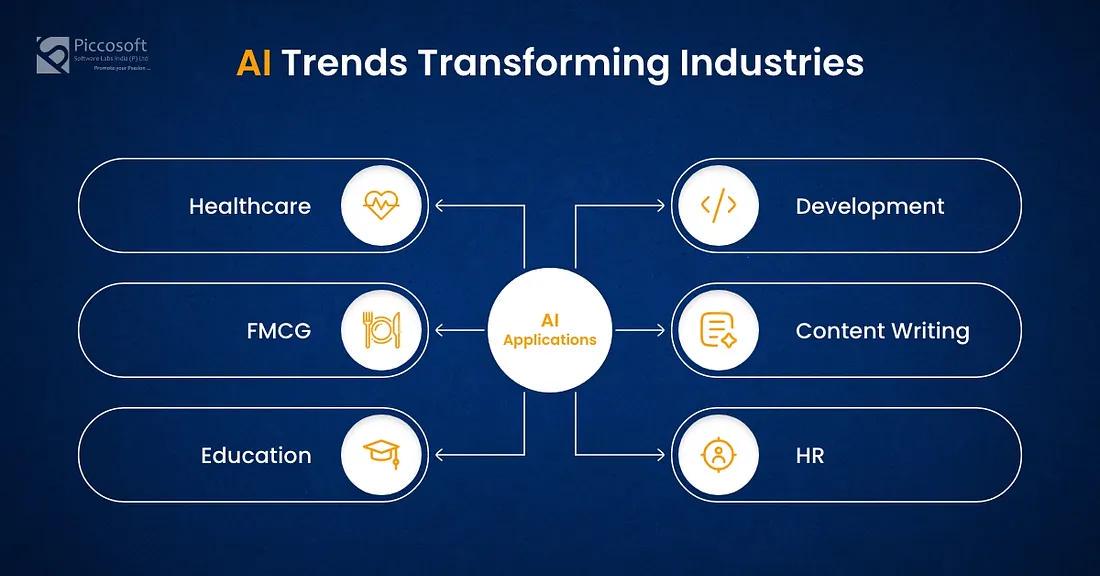
Artificial Intelligence (AI) is reshaping industries across the globe, driving innovation, efficiency, and personalization. From healthcare to FMCG, education, HR, and development, AI trends continue to create new opportunities and challenges. In this article, we’ll explore how AI is impacting these diverse sectors, revolutionizing both the way businesses operate and how we interact with technology. AI in Healthcare: Revolutionizing Patient Care and Diagnostics AI’s influence in healthcare is undeniable, offering breakthroughs in diagnostics, treatment plans, and patient management. Key trends include: AI-Powered Diagnostics: Machine learning models are increasingly capable of diagnosing diseases such as cancer and cardiovascular conditions more accurately than human doctors. AI tools like IBM Watson Health analyse medical records and imaging to provide faster and more accurate diagnoses. Personalized Medicine: AI algorithms can process vast amounts of genetic, clinical, and lifestyle data to develop tailored treatment plans. This allows for more effective therapies, especially in fields like oncology and genomics. Telemedicine and Virtual Health Assistants: AI-powered virtual assistants like Babylon Health help patients with initial diagnoses and appointment scheduling, offering a convenient alternative to physical visits. AI chatbots also handle basic queries, reducing the strain on medical professionals. Robotic Surgery: AI-assisted robotic systems are performing minimally invasive surgeries with greater precision. These systems improve patient recovery times and reduce human error. AI in FMCG: Optimizing Supply Chains and Enhancing Customer Experience In the fast-moving consumer goods (FMCG) sector, AI is streamlining operations, from production to customer service: Predictive Demand Forecasting: AI is being used to predict consumer behaviour based on historical data and current trends. This allows companies to optimize inventory management, reduce wastage, and meet consumer demands efficiently. Chatbots for Customer Engagement: AI chatbots are enhancing customer service by providing real-time responses to inquiries and offering personalized product recommendations. Brands like Coca-Cola and Unilever use AI-powered chatbots for customer interaction. Automated Quality Control: AI-powered vision systems are used for automated quality control in manufacturing, ensuring that only the best products reach consumers. This reduces human error and accelerates production lines. Personalized Marketing: AI enables FMCG companies to deliver highly personalized marketing messages. Machine learning algorithms analyse consumer data to tailor ads and promotions based on individual preferences and behaviour. AI in Education: Personalized Learning and Administrative Efficiency Education is undergoing a transformation thanks to AI, from personalized learning experiences to efficient administration: Adaptive Learning Platforms: AI-driven platforms like Coursera and EdTech tools adapt to the learning pace and style of individual students, providing customized content to enhance understanding and retention. Automated Grading: AI algorithms can assess student work, from multiple-choice questions to essays, reducing the workload on teachers and providing faster feedback to students. Virtual Tutors: AI-powered tutoring systems can provide students with real-time support, offering explanations, answering questions, and guiding them through difficult subjects. This makes education more accessible and less dependent on human resources. Predictive Analytics for Student Success: Universities are using AI to predict student performance, identify at-risk students, and intervene before they fall behind. AI analyses data such as attendance, participation, and grades to improve academic outcomes. AI in Development: Transforming Software Engineering and Automation AI has become integral to the world of software development, bringing automation, efficiency, and innovation: AI-Assisted Coding: Tools like GitHub Copilot use AI to suggest code snippets, auto-complete functions, and even write code, reducing development time and errors. This trend accelerates the software development lifecycle and enhances developer productivity. Automated Testing: AI-based tools like Testim and Applitools automate software testing, detecting bugs more quickly and thoroughly than manual methods. These tools use machine learning to adapt to new code structures, making them highly efficient. AI-Enhanced DevOps: In DevOps, AI is used to optimize workflows, predict infrastructure failures, and automate repetitive tasks. Platforms like DataRobot help monitor system performance and predict issues, enabling proactive maintenance. Natural Language Processing (NLP) in Code Analysis: NLP is being applied to understand and optimize code by detecting inefficiencies and suggesting improvements, thus making software systems more robust and scalable. AI in Content Writing: Enhancing Creativity and Productivity AI’s role in content creation is expanding, offering new ways to improve the writing process: AI-Powered Content Generators: Tools like ChatGPT and Jasper use deep learning models to generate human-like content, including blogs, articles, and social media posts. While these tools can’t fully replace human writers, they accelerate the content creation process and offer inspiration for creativity. SEO Optimization: AI tools like Clearscope and MarketMuse analyse content for search engine optimization (SEO), offering recommendations for improving rankings. These platforms ensure that content is relevant, well-structured, and keyword-optimized for search engines. Grammar and Style Checking: AI-based platforms such as Grammarlyprovide real-time feedback on grammar, style, and tone, ensuring high-quality writing. These tools help writers avoid common mistakes and maintain consistency. Content Personalization: AI enables the creation of personalized content for specific audiences by analysing user data and preferences. This trend is particularly valuable in marketing, where tailored messaging can significantly boost engagement. AI in HR: Streamlining Recruitment and Employee Engagement Human Resources (HR) is embracing AI to make recruitment, employee engagement, and performance management more efficient: AI in Recruitment: AI-powered platforms like HireVue and Pymetrics are used to screen candidates, analyse resumes, and conduct video interviews. AI can evaluate candidates based on facial expressions, tone, and answers, ensuring that the best fit for the job is identified. Employee Engagement Tools: AI tools like Glint and TINYpulseanalyse employee feedback and engagement data to offer insights into workplace morale, helping companies to take proactive steps to improve the work environment. Automated Onboarding: AI-driven chatbots and platforms guide new employees through the onboarding process, automating document submissions and answering common questions. This reduces the HR workload and improves employee satisfaction. Performance Management: AI tools like Betterworksanalyse employee performance data, offering insights and feedback to help employees improve their productivity. These platforms also track progress towards goals and recommend personalized development plans. Conclusion With expertise in AI technologies such as machine learning, natural language processing, and automation, Piccosoft empowers organizations to stay competitive in an increasingly AI-driven world. Whether it’s revolutionizing healthcare diagnostics or streamlining supply chains in FMCG, Piccosoft is paving the way for smarter, more efficient, and impactful technology solutions.
By Raja
AI
09 Oct 2026 , 11:00 AM
The Shift from PHP to JavaScript: How Piccosoft is paving the Way for Modern Web Development
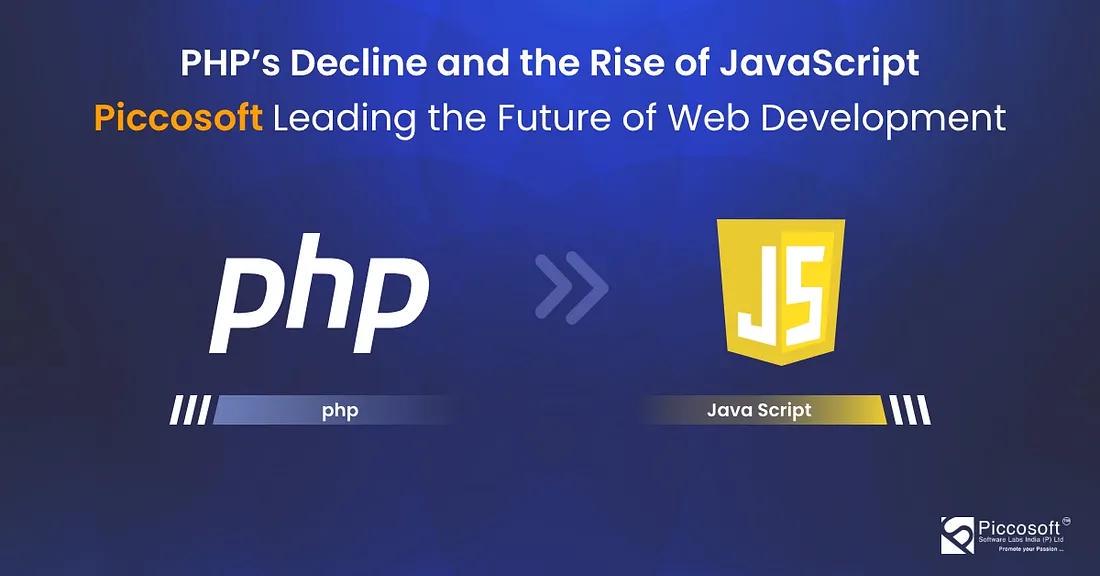
PHP usage statistics In November 2021, PHP was still powering over 30,000 of the top 1 million websites. However, just two years later, that number has nearly halved, with PHP usage now closer to 15,000 sites, according to BuiltWith. JetBrains surveys, shows PHP’s popularity falling from around 30% to 18% between 2018 and 2023. This 40% decline highlights a significant shift in the web development landscape, as more developers transition to modern technologies like JavaScript. One of the main reasons for PHP’s fall from grace is WordPress’ shift towards a “JavaScript-first” approach. WordPress, the world’s most popular content management system, has long been powered by PHP. However, the introduction of Gutenberg, a block-based interface, has steered development efforts away from PHP and towards JavaScript. Matt Mullenweg, WordPress co-creator and CEO of Automattic, confirmed this during WordCamp Asia 2024, stating that WordPress is now primarily a JavaScript project. Although PHP remains critical to WordPress’ backend, much of the new development is happening in JavaScript. Mullenweg even mentioned that processing tasks, which traditionally occur server-side in PHP, could now be more efficiently handled client-side using JavaScript. This transition has been challenging for developers who have relied on PHP, especially as Gutenberg’s abstractions and JavaScript complexity make the new system unfamiliar. What does this mean for PHP? While WordPress’ pivot to JavaScript has contributed to the decline, it is not the sole cause. The popularity of JavaScript frameworks like React, coupled with the growing preference for full-stack JavaScript development, has shifted the web development landscape. PHP’s image as a legacy language hasn’t helped either, as younger developers are increasingly choosing more modern languages. Despite this, PHP is far from dead. The PHP Foundation, established in 2021, is committed to sustaining the language. With key sponsors like JetBrains and Automattic, and active contributions from a dedicated group of developers, PHP continues to evolve. The foundation’s challenge, however, is addressing PHP’s tarnished public image and competing with the rapid growth of JavaScript. Conclusion While PHP is undeniably losing ground, it is still alive and evolving. As the web development community continues to move towards JavaScript, PHP will likely play a smaller role. However, with a strong foundation and millions of websites still dependent on it, PHP isn’t disappearing any time soon. Its challenge lies in adapting to modern demands while retaining the trust of its loyal community. Whether it can regain its former status remains to be seen. Piccosoft exemplifies this adaptability, leveraging its strong foundation in PHP to transition seamlessly into the JavaScript era. By embracing cutting-edge technologies such as JavaScript frameworks, Node.js, and blockchain solutions, Piccosoft is helping businesses modernize their applications and navigate this evolving landscape.
By Suresh
PHP, JavaScript
More blogs

- 1
- 2
- 3
- 4
