






 React Native Development
 Angularjs 2 Development
 Angularjs Development
 Nodejs Development
Piccosoft

Picco Labs
Picco AI
Piccosoft
Blogs
Showcases blog posts as Entries, grouped into categories like Lifestyle, Technology, or Travel. Each blog uChannel for blog templatesses a Blog Template for engaging and readable layouts.
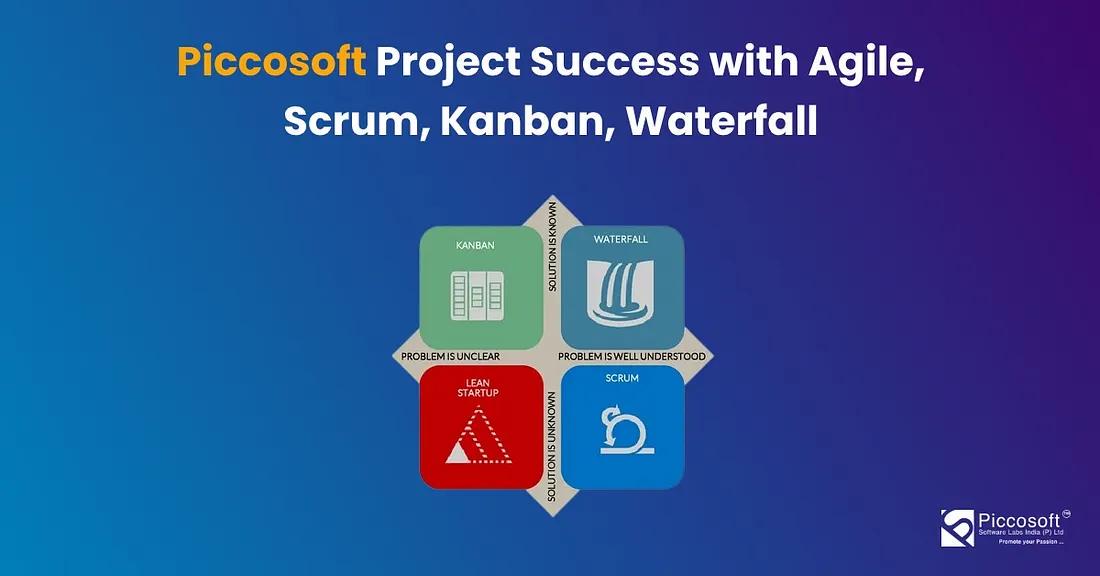
Successful project execution requires not only skilled professionals but also the right project management methodology. The approach you choose can significantly impact the workflow, timelines, and final deliverables. At Piccosoft, we bring our expertise to several methodologies — Agile, Scrum, Kanban, Waterfall, Lean, Six Sigma, and Extreme Programming (XP) to deliver projects that align perfectly with your business needs. Below, we explore these methodologies and how Piccosoft tailors each to ensure project success. Agile: Delivering Flexibility and Continuous Improvement Best Suited For: Software development, flexible projects Key Features: Iterative cycles, customer feedback, flexible scope Piccosoft’s Approach: Piccosoft applies Agile to ensure rapid iterations and regular client feedback, keeping projects aligned to goals. Agile’s adaptability makes it ideal for projects where requirements might change during the execution phase. Our teams thrive on the close collaboration Agile promotes, allowing for swift adjustments in real time based on client needs. Scrum: Structured Sprints for Focused Delivery Best Suited For: Short-cycle projects, teams requiring structure Key Features: Sprints, defined roles, daily stand-ups Piccosoft’s Approach: Piccosoft uses Scrum for teams that need focused sprint cycles, allowing efficient delivery in controlled bursts. With Scrum, each team member has clear responsibilities, and frequent communication through daily stand-ups ensures no one falls off track. This structure makes it ideal for meeting project deadlines while maintaining high-quality deliverables. Kanban: Visual Workflow Management for Efficiency Best Suited For: Continuous delivery, operational workflows Key Features: Visual boards, continuous task flow, work-in-progress limits Piccosoft’s Approach: Piccosoft utilizes Kanban for continuous improvement, tracking tasks visually and removing bottlenecks as needed. By limiting work-in-progress, our teams ensure that tasks move through the workflow smoothly, preventing overload and maintaining efficiency in delivery. This is especially effective in operational environments or where ongoing tasks flow consistently. Waterfall: Sequential Planning for Predictability Best Suited For: Projects with fixed requirements and clear timelines Key Features: Sequential phases, strict documentation Piccosoft’s Approach: For projects requiring a structured approach, Piccosoft implements Waterfall to ensure precision and clear progress. Waterfall’s linear, step-by-step methodology ensures that each phase of the project must be completed before moving on to the next, making it ideal for projects with fixed requirements. This method excels in projects like system implementation or construction, where the scope is unlikely to change. Lean: Maximizing Value by Minimizing Waste Best Suited For: Process efficiency, reducing waste Key Features: Focus on value delivery, minimizing non-essential processes Piccosoft’s Approach: Piccosoft integrates Lean practices for clients seeking to optimize cost and resource use, enhancing value. We focus on eliminating waste by removing non-value-added activities, thereby streamlining the workflow and improving efficiency. This helps businesses achieve faster delivery times and reduced costs without sacrificing quality. Six Sigma: Data-Driven Quality Management Best Suited For: Quality management, process improvement Key Features: Data-driven decisions, reducing variability Piccosoft’s Approach: Piccosoft employs Six Sigma principles for improving quality by minimizing errors and streamlining operations. By focusing on data and statistical analysis, Six Sigma allows us to enhance quality control and achieve near-perfect results in industries where precision is critical, such as manufacturing and healthcare. Extreme Programming (XP): Delivering High-Quality Software Through Collaboration Best Suited For: High-quality software output, quick customer collaboration Key Features: Continuous integration, pair programming, test-driven development Piccosoft’s Approach: For software requiring frequent updates and high technical standards, Piccosoft uses XP to ensure fast, quality releases. By incorporating practices like pair programming and test-driven development (TDD), we ensure that code quality is maintained, and bugs are minimized early in the process. XP’s close customer collaboration model ensures that the final product is exactly what the customer envisions, with continuous feedback loops and frequent releases. Conclusion: Tailoring Methodologies to Business Needs with Piccosoft At Piccosoft , we believe that every project is unique, and so should be its management approach. Whether it’s Agile’s flexibility, Scrum’s structure, Kanban’s efficiency, or Waterfall’s predictability, we leverage the right methodology to ensure project success. From software development to process improvement, Piccosoft’s expertise spans multiple methodologies, allowing us to adapt and deliver quality projects that meet the specific needs of our clients. Ready to bring your project to life with the perfect management approach? Contact Piccosoft today to leverage our expertise in project execution and management.
Continue reading »
In an era where convenience is paramount, voice interfaces like Amazon Alexa are making appointment scheduling easier than ever. By allowing users to book, reschedule, and cancel appointments through simple voice commands, Alexa is transforming how we manage our schedules. This seamless interaction enhances user experience and streamlines appointment management across various industries. Welcome Message Alexa starts the interaction with a friendly and welcoming message: Alexa: “Welcome! I’m Alexa, here to help you with your appointment scheduling. How can I assist you today?” Appointment Booking Conversations Here’s how a typical conversation with Alexa for booking an appointment might flow: 1. Booking an Appointment User: “I need an appointment with Dr. Smith.” Alexa: “Sure! Which day would you prefer for your appointment with Dr. Smith?” User: “Next Tuesday.” Alexa: “What time works best for you on next Tuesday?” User: “In the morning, around 10 AM.” Alexa: “I’ve scheduled your appointment with Dr. Smith for next Tuesday at 10 AM. Is there anything else I can assist you with?” This conversation flow ensures that Alexa gathers all the necessary details to book the appointment accurately. Users specify the provider, day, and time, and Alexa confirms the appointment with all the details. 2. Rescheduling an Appointment User: “I need to reschedule my appointment with Dr. Jones.” Alexa: “When would you like to reschedule your appointment with Dr. Jones?” User: “Can you move it to this Friday?” Alexa: “What time would you prefer for this Friday?” User: “2 PM.” Alexa: “I’ve rescheduled your appointment with Dr. Jones to this Friday at 2 PM. Is there anything else you need?” This interaction allows users to easily adjust their appointments by providing the new date and time. Alexa processes the changes and confirms the updated schedule. 3. Cancelling an Appointment User: “I want to cancel my appointment with Dr. Smith.” Alexa: “I can help with that. Can you please confirm the date of the appointment you want to cancel?” User: “It’s for next Wednesday.” Alexa: “I’ve cancelled your appointment with Dr. Smith on next Wednesday. Is there anything else I can assist you with?” Alexa handles appointment cancellations efficiently, asking for confirmation to ensure the correct appointment is cancelled. Conclusion Voice interfaces like Alexa are revolutionizing appointment scheduling by offering a straightforward and efficient way to manage appointments. Through simple voice commands, users can easily book, reschedule, and cancel appointments, enhancing their overall experience. This technology not only saves time but also provides a more accessible way to handle scheduling tasks. Piccosoft Software Labs India (P) Limited specializes in developing custom Alexa skills to improve appointment booking and other voice interface applications, ensuring a seamless user experience. For more details, write to suresh@piccosoft.com

In today’s digital landscape, user expectations for real-time updates and smooth interactions are higher than ever. Whether it’s collaborative editing, live dashboards, or instant messaging, businesses need to offer fast and reliable data synchronization. To meet these demands, SignalR, Websockets, and Lock Services play a crucial role in building robust and scalable applications that handle real-time communication and manage concurrent data access. In this article, we’ll explore how these technologies contribute to seamless data synchronization and how Piccosoft leverages them to build modern, high-performance applications. Understanding Real-Time Data Synchronization Real-time synchronization refers to the ability of applications to push updates to clients instantly without them needing to manually refresh or request new data. This is essential in applications where multiple users interact with the system simultaneously, such as: Chat applications Collaborative editing platforms Live stock price trackers Real-time analytics dashboards To achieve this, technologies like SignalR and Websockets provide the necessary infrastructure for continuous and instant data flow, while Lock Services ensure data integrity when multiple users are trying to modify the same resources concurrently. SignalR: Simplifying Real-Time Communication SignalR is a library that simplifies adding real-time functionality to applications by allowing servers to instantly push updates to clients. This is especially useful in scenarios where bi-directional communication is required, meaning both the server and the client can send messages to each other over a single connection. Key Benefits of SignalR: Instant Notifications: Applications like live chat, notifications, or real-time games benefit from the instant update feature of SignalR. Automatic Connection Management: SignalR manages connections seamlessly, even handling reconnections if a client temporarily loses connection. Scalability: SignalR can scale across multiple servers, making it ideal for applications with a large number of users. Example Use Case: Imagine an eCommerce platform where multiple users are interacting with the same product page. If the stock quantity changes due to a purchase, SignalR instantly notifies all users, updating the stock availability in real-time. At Piccosoft, we implement SignalR in projects requiring live data updates, such as real-time order tracking systems, chat applications, and notification services. Websockets: Persistent, Low-Latency Connections While SignalR is a higher-level abstraction, Websockets offer the underlying technology for maintaining persistent, low-latency connections between clients and servers. Unlike traditional HTTP connections, which open and close for each request, Websockets keep the connection open, allowing continuous data exchange with minimal delay. Key Benefits of Websockets: Reduced Overhead: Since the connection remains open, Websockets reduce the overhead associated with establishing new connections, making data transmission faster. Real-Time Streaming: Ideal for real-time apps that require frequent data updates, such as live streaming, multiplayer games, and collaboration tools. Example Use Case: In a collaborative document editing application, multiple users can edit the same document at the same time. Websockets ensure that every user sees changes in real-time, without the need for periodic refreshes. We have used Websockets in Piccosoft to build applications that demand fast, continuous data transfer, such as live dashboards, multiplayer gaming platforms, and real-time bidding systems. Lock Services: Ensuring Data Integrity in Concurrent Environments While real-time communication is critical, managing concurrent access to shared resources is just as important. Lock Services ensure that multiple users or systems do not modify the same data simultaneously, which could lead to conflicts or data corruption. Key Benefits of Lock Services: Concurrency Control: Lock services allow for controlled access to resources, ensuring that only one process or user can modify a particular piece of data at a time. Data Integrity: In eCommerce applications or collaborative platforms, lock services prevent multiple users from overwriting each other’s changes. Prevention of Race Conditions: By locking resources, race conditions (where two processes compete to modify the same data) are avoided, ensuring data consistency. Example Use Case: In a financial management system, when one user is editing a customer’s details, a lock service can be employed to prevent another user from making changes at the same time. Once the first user has completed the update, the lock is released, and others can access the data. At Piccosoft, we implement lock services in systems that require high levels of data consistency, such as financial applications, inventory management systems, and booking platforms. Bringing It All Together: A Real-World Scenario Let’s consider an online auction platform. In this system, users place bids in real-time, competing for the same product. Here’s how SignalR, Websockets, and Lock Services work together: SignalR delivers real-time notifications to all bidders, informing them of the latest bid amount. WebSockets maintain a persistent connection, ensuring that bid amounts are updated instantly without delays. Lock Services ensures that no two bidders can place a bid for the same item simultaneously, preventing conflicts. By integrating these technologies, Piccosoft builds auction platforms that offer real-time, secure, and scalable user experiences. Conclusion The combination of SignalR, Websockets, and Lock Services empowers developers to create applications that handle real-time communication and data synchronization seamlessly while maintaining data integrity in concurrent environments. At Piccosoft, we specialize in leveraging these technologies to deliver scalable and efficient solutions tailored to your business needs. Want to learn more about how we can help your business with real-time data synchronization? Get in touch with Piccosoft today.
Blockchain technology initially recognized for its role in cryptocurrencies like Bitcoin, has evolved into a versatile tool with potential applications across various industries. This article explores ten innovative use cases of blockchain beyond its traditional financial context, providing detailed explanations and potential implementation strategies. 1. Supply Chain Transparency Challenge: Tracking the origin, movement, and authenticity of products in complex supply chains. Blockchain Solution: Immutable Records: Blockchain creates a permanent, unchangeable record of transactions, ensuring that every step in the supply chain is recorded and cannot be altered. This provides transparency and traceability, enabling consumers to verify the authenticity and origin of products. Smart Contracts: Smart contracts can automate processes like payments and inspections, reducing the risk of human error and fraud. Implementation: Integrate blockchain technology with existing supply chain management systems. Assign unique identifiers to products and record their movements on the blockchain. Implement smart contracts to automate processes like payments and quality checks. 2. Healthcare Data Management Challenge: Securing and sharing patient data while maintaining privacy. Blockchain Solution: Decentralized Network: Blockchain creates a decentralized network where patient data is stored across multiple nodes, reducing the risk of data breaches. Permissioned Access: Access to patient data can be controlled using permissioned blockchain networks, ensuring that only authorized parties can view and share information. Data Privacy: Blockchain technology can be combined with encryption techniques to protect patient data privacy. Implementation: Develop a decentralized healthcare data network based on a suitable blockchain platform. Implement robust security measures to protect patient data. Establish protocols for data sharing and access control. 3. Voting Systems Challenge: Ensuring the integrity and security of voting systems. Tamper-Proof Records: Blockchain provides a tamper-proof record of votes, making it difficult for malicious actors to manipulate the outcome. Verifiability: Voters can verify that their votes have been recorded correctly, increasing trust in the electoral process. Implementation: Develop a blockchain-based voting system that allows voters to cast their votes securely. Implement measures to prevent double voting and ensure the privacy of voter identities. Conduct rigorous audits and testing to verify the security and integrity of the system. 4. Intellectual Property Protection Challenge: Protecting copyrights, patents, and trademarks from infringement. Blockchain Solution: Timestamping: Blockchain can timestamp digital assets, providing evidence of ownership and creation date. Immutable Records: Once a digital asset is recorded on a blockchain, it cannot be altered, making it difficult for unauthorized individuals to claim ownership. Implementation: Develop a blockchain-based platform for registering and storing digital assets. Implement measures to protect the privacy of intellectual property owners. Educate creators about the benefits of using blockchain for IP protection. 5. Real Estate Transactions Challenge: Streamlining and securing property transactions. Blockchain Solution: Smart Contracts: Smart contracts can automate property transfers, reducing paperwork and minimizing the risk of errors. Transparency: Blockchain provides transparency into property ownership and transaction history, reducing the risk of fraud. Implementation: Develop smart contracts that automate various stages of the property transaction process, such as escrow, title transfer, and payment. Integrate blockchain technology with existing real estate databases and systems. Educate stakeholders about the benefits of using blockchain for real estate transactions. 6. Identity Verification Challenge: Verifying identity in a secure and efficient manner. Blockchain Solution: Decentralized Identity: Blockchain can create decentralized identity systems where individuals control their own data. Secure Verification: Identity verification can be conducted securely and efficiently using blockchain-based solutions. Implementation: Develop a decentralized identity platform that allows individuals to store and manage their personal information. Implement robust security measures to protect user data. Integrate the identity platform with various applications and services that require identity verification. 7. Energy Trading Challenge: Facilitating peer-to-peer energy trading and optimizing grid management. Blockchain Solution: Transparent Transactions: Blockchain can enable transparent and decentralized energy trading, allowing individuals and businesses to buy and sell energy directly. Smart Grid Integration: Blockchain can be integrated with smart grids to optimize energy distribution and consumption. Implementation: Develop a blockchain-based platform for energy trading. Integrate the platform with smart meters and other energy infrastructure. Implement incentives and regulations to promote decentralized energy trading. 8. Gaming Industry Challenge: Ensuring fairness and transparency in gaming transactions. Blockchain Solution: Non-Fungible Tokens (NFTs): Blockchain can be used to create unique in-game assets known as NFTs, which can be traded and owned on a decentralized platform. Fairness and Transparency: Blockchain can ensure fair gameplay by preventing cheating and tampering with game outcomes. Implementation: Integrate blockchain technology into gaming platforms to create and manage NFTs. Implement mechanisms to prevent cheating and ensure fair gameplay. Educate players about the benefits of using blockchain in gaming. 9. Internet of Things (IoT) Challenge: Securing and managing data generated by IoT devices. Blockchain Solution: Data Security: Blockchain can provide a secure and tamper-proof way to store and manage IoT data. Device Authentication: Blockchain can be used to authenticate IoT devices and prevent unauthorized access. Implementation: Integrate IoT devices with a blockchain network to store and share data securely. Implement security measures to protect IoT devices and prevent attacks. Develop smart contracts to automate tasks and manage IoT devices. 10. Decentralized Finance (DeFi) Challenge: Providing financial services without intermediaries. Blockchain Solution: Decentralized Applications: DeFi applications leverage blockchain technology to offer financial services without the need for traditional intermediaries. Transparency and Efficiency: DeFi platforms are transparent, efficient, and resistant to censorship. Implementation: Develop DeFi applications on a suitable blockchain platform. Ensure compliance with relevant regulations and standards. Promote the adoption of DeFi among users. Conclusion As blockchain technology continues to evolve, its potential applications expand beyond traditional financial use cases. The innovative solutions outlined in this article demonstrate the versatility and transformative power of blockchain in various industries. By addressing challenges related to security, transparency, and efficiency, blockchain is poised to revolutionize how we conduct business and interact with the world around us. With Piccosoft ’s team of skilled blockchain experts, you can confidently implement blockchain solutions tailored to your specific needs, harnessing the technology’s potential to transform your business.
Serverless architecture is revolutionizing the way applications are developed, offering unmatched scalability, reduced maintenance, and cost-effective operations. Piccosoft, a leader in innovative technology solutions, is at the forefront of this transformation by leveraging Golang to build powerful serverless applications. In this article, we’ll explore why Golang is an exceptional choice for serverless environments, the unique advantages it offers, and how Piccosoft implements this powerful combination to deliver top-tier solutions. Why Golang is a Strong Fit for Serverless: Optimized Performance: Golang’s compiled nature, coupled with its efficient memory usage, ensures top-notch performance — a critical factor in serverless applications where speed directly influences cost. Effective Concurrency Handling: Golang’s in-built concurrency support makes it ideal for managing multiple processes simultaneously, a key requirement in event-driven serverless architectures. Simplicity and Speed: Golang’s clean syntax and extensive standard library facilitate quick development cycles, making it perfect for serverless environments where rapid deployment is crucial. Advantages of Using Golang in Serverless Architecture: Lower Latency: The fast startup times of Golang applications significantly reduce cold start latency, enhancing the overall user experience in serverless deployments. Cost-Efficient Resource Management: Golang’s efficient execution minimizes resource usage, which is essential for reducing operational costs in serverless environments. Cross-Platform Versatility: Golang’s ability to compile to native code across multiple platforms allows for seamless deployment on various cloud providers, enhancing flexibility. Piccosoft’s Approach to Serverless Development with Golang: Custom Solutions: Piccosoft uses Golang to develop custom serverless applications that cater to the specific needs of businesses, ensuring that each solution is both scalable and efficient. API Development: Our team excels in building scalable API gateways using Golang, enabling seamless interaction between different services and ensuring high availability. Real-Time Data Processing: Piccosoft leverages Golang’s concurrency model to build robust solutions for processing real-time data streams, ideal for IoT and big data applications. Event-Driven Applications: Piccosoft specializes in developing event-driven serverless applications that respond to triggers like user actions or system events, ensuring responsiveness and reliability. Best Practices in Serverless Development: Minimizing Cold Starts: Piccosoft optimizes Golang functions to start quickly, reducing the impact of cold starts on application performance. Resource Optimization: We ensure that all serverless applications are optimized for resource usage, keeping costs low while maintaining high performance. Continuous Monitoring: Our team implements continuous monitoring and logging to ensure serverless applications perform optimally and to quickly address any issues that arise. Conclusion: Golang’s performance, concurrency capabilities, and simplicity make it a powerful tool for serverless application development. At Piccosoft , we harness these strengths to build scalable, efficient, and cost-effective solutions tailored to our clients’ needs. Whether developing APIs, processing real-time data, or building event-driven applications, Piccosoft leverages the synergy between Golang and serverless architecture to deliver exceptional results.
MORE BLOGS

26 Jun 2024 , 10:00 AM
Essential UI/UX Best Practices for Front-End Development: Insights from Piccosoft Developers
In the contemporary digital world, UX and UI play vital roles in shaping a product’s success. Their design and functionality are key factors that can either captivate users or drive them away. As users become more discerning, delivering a seamless and aesthetically pleasing interface is paramount. Drawing on the expertise of Piccosoft Developers, this article delves into essential UI/UX best practices that every front-end developer should follow. Prioritize User-Centred Design Understand Your Users: A deep understanding of the target audience is the cornerstone of effective UI/UX design. Conduct user research through surveys, interviews, and usability testing to gather insights into user needs, behaviours, and pain points. Create user personas to represent different segments of your audience and keep these personas in mind throughout the design process. Empathy in Design: Empathy allows designers to create solutions that resonate with users on an emotional level. By putting yourself in the user’s shoes, you can anticipate their needs and design interfaces that are intuitive and engaging. This approach ensures that the end product is both useful and delightful. Simplicity and Clarity Minimalist Design: Simplicity is key in UI/UX design. Avoid clutter by embracing a minimalist design approach. Use ample white space to give elements room to breathe, making the interface more digestible and less overwhelming. Each element on the screen should serve a purpose and contribute to the overall user experience. Clear and Consistent Navigation: Navigation should be intuitive and consistent across the application. Use familiar icons and labels to help users understand how to move through your interface without confusion. Implement a logical hierarchy and grouping of navigation elements to ensure users can find what they need quickly and effortlessly. Visual Hierarchy and Design Principles Establish a Visual Hierarchy: Visual hierarchy guides users’ attention to the most important elements on the screen. Achieve this by varying the size, colour, and placement of elements. Larger and bolder elements draw attention first, while smaller and lighter elements recede into the background. Consistency in Design: Maintain consistency in design elements such as typography, colour schemes, and button styles across the application. This creates a cohesive look and feel, reducing the cognitive load on users as they navigate your interface. Consistent design also reinforces brand identity and user trust. Responsive and Adaptive Design Mobile-First Approach: With the proliferation of mobile devices, adopting a mobile-first approach is essential. Design for smaller screens first and then scale up for larger devices. This ensures that your application is accessible and functional on all screen sizes. Fluid Grids and Flexible Images: Utilize fluid grids and flexible images to create a responsive design that adapts to different screen sizes and orientations. CSS frameworks like Bootstrap or Flexbox can help streamline this process, ensuring a consistent and responsive layout. Accessibility and Inclusivity Ensure Accessibility: Accessibility is not just a best practice; it’s a necessity. Design your application to be usable by people with disabilities. Implement ARIA (Accessible Rich Internet Applications) landmarks, provide keyboard navigation, and ensure sufficient colour contrast. Use semantic HTML elements to convey meaning and structure, aiding screen readers in interpreting your content. Inclusive Design: Inclusivity goes beyond accessibility. Design for diverse user groups, considering factors such as age, language, and cultural differences. Provide multiple ways for users to interact with your application, ensuring that everyone can have a positive experience regardless of their background or abilities. Performance Optimization Optimize Loading Times: Performance is a critical aspect of UX. Optimize images, leverage browser caching, and minimize the use of heavy scripts to reduce loading times. Tools like Google PageSpeed Insights can help identify areas for improvement and ensure a smooth user experience. Asynchronous Loading: Implement asynchronous loading for non-critical resources. This technique allows the main content to load first, providing users with immediate access to essential information while additional resources continue to load in the background. Continuous Testing and Iteration User Testing: Regular user testing is essential for identifying usability issues and gathering feedback. Conduct A/B testing to compare different design variations and determine which performs better. Use analytics tools to track user behaviour and make data-driven decisions. Iterate and Improve: UI/UX design is an iterative process. Continuously refine and improve your design based on user feedback and testing results. Stay updated with the latest design trends and technological advancements to keep your application relevant and competitive. Conclusion Incorporating these UI/UX best practices, as highlighted by Piccosoft Developers, can significantly enhance the user experience of your front-end applications. By prioritizing user-centred design, simplicity, consistency, responsiveness, accessibility, performance, and continuous improvement, you can create interfaces that are not only visually appealing but also highly functional and user-friendly. Embrace these principles to deliver exceptional digital experiences that meet and exceed user expectations.
By Suresh
UI,UX
05 Jun 2024 , 10:00 AM
Building Custom Applications for Unique Business Requirements with Piccosoft Development Team
In today’s fast-paced business environment, companies must adapt to rapidly changing market conditions and customer demands. One of the most effective ways to stay ahead is by developing custom applications tailored to specific business requirements. Leveraging the expertise of the Piccosoft Development Team can significantly enhance this process, ensuring that your solutions are not only functional but also innovative and scalable. This article will explore the steps involved in building custom applications, the importance of choosing the right development team, and how the Piccosoft Development Team can help you achieve your business goals. Understanding Your Business Needs The first step in building a custom application is to thoroughly understand your business requirements. This involves identifying the specific challenges you face and the goals you aim to achieve. Conducting a detailed analysis of your current processes, customer feedback, and market trends will provide valuable insights that will inform the development process. Key questions to consider include: What problems are we trying to solve? What are our short-term and long-term goals? Who are the end-users, and what are their needs and preferences? What existing systems and processes need integration or enhancement? Choosing the Right Development Team Selecting the right development team is crucial for the success of your custom application. The Piccosoft Development Team brings a wealth of experience and expertise in various technologies and industries. Here are the key benefits of choosing the Piccosoft Development Team: Expertise in Cutting-Edge Technologies: Our development team is proficient in the latest technologies and frameworks, ensuring that your application is built using the best tools available. Tailored Solutions: We focus on understanding your unique business needs and delivering solutions that are specifically designed to meet those needs. Scalability and Flexibility: Our custom applications are built to scale with your business, allowing for easy expansion and adaptation as your requirements evolve. High-Quality Standards: We adhere to rigorous quality assurance processes to ensure that your application is reliable, secure, and performs optimally. The Development Process At Piccosoft, we follow a structured development process to ensure that your custom application is delivered on time and within budget. The key stages of our development process include: 1. Discovery and Planning Conducting a thorough analysis of your business needs and goals. Defining the project scope, timeline, and budget. Creating a detailed project plan and timeline. 2. Design and Prototyping Developing wireframes and mockups to visualize the application. Gathering feedback and making necessary adjustments. Finalizing the design and preparing for development. 3. Development and Testing Writing clean, efficient, and maintainable code. Conducting regular testing and quality assurance checks. Implementing feedback and making iterative improvements. 4. Deployment and Support Deploying the application to your production environment. Providing training and support to ensure smooth adoption. Offering ongoing maintenance and updates to keep the application running smoothly. Conclusion Building custom applications tailored to your unique business requirements is essential for staying competitive in today’s market. By partnering with the Piccosoft Development Team, you can leverage our expertise and experience to create high-quality, scalable, and innovative solutions that drive your business forward. Contact us today to learn more about how we can help you achieve your business goals with custom application development.
By Raja
Custom Application

28 May 2024 , 10:00 AM
Exploring Blockchain Traceability with Hyperledger Fabric at Piccosoft
At Piccosoft, we’re always passionate about leveraging cutting-edge technology to drive positive changes in society. We recently came across an insightful article that delves into the complexities of supply chain transparency within the fashion industry. The article delves into the potential shortcomings of using photos of garment workers in the fashion industry, particularly in campaigns like ‘Fashion Revolution’, which aim to promote transparency and ethical practices. It discusses how these campaigns raise awareness but may not result in substantial changes in labor practices or supply chain transparency. Additionally, it questions the ethics of brands asking for personal information without reciprocating transparency. It highlights the importance of going beyond surface-level efforts to bring real transparency within brands, including concrete information about their supply chains and labor standards. Blockchain technology, with its decentralized and immutable ledger, offers a revolutionary way to track and trace products from their origin to the end consumer. Hyperledger Fabric , as a permissioned blockchain framework, provides the ideal infrastructure for implementing traceability solutions with added privacy and scalability. Imagine a world where consumers can scan a QR code on a product and instantly access detailed information about its journey through the supply chain. With blockchain and Hyperledger Fabric, this vision becomes a reality. Traceability tokens embedded within each product contain vital data such as production location, manufacturing process, details of the artisans and environmental impact. By implementing blockchain-based traceability solutions, businesses can empower consumers to make informed choices and hold brands accountable for their ethical and sustainable practices. From fair trade garments to organic produce, blockchain enables a new era of transparency and trust in every purchase. Join the Blockchain Revolution at Piccosoft . We’re committed to driving innovation and positive change through blockchain technology. We have developed an end-to-end traceability solution for the Food Industry, enabling traceability from Farm to Fork. Our expertise extends across industries, allowing us to develop tailored traceability solutions to meet your needs. Get in touch with us for the implementation of traceability and transparency through innovative technology.
By Suresh
Blockchain
16 Mar 2026 , 10:00 AM
Vercel at Piccosoft: Simplifying Deployment Processes
At Piccosoft, we understand the importance of seamless and efficient project deployment. As developers, ensuring that our projects are accessible, up-to-date, and running smoothly is crucial for delivering high-quality software. While there are several platforms available for deploying web projects, we have found Vercel to be particularly user-friendly and efficient. In this article, we’ll share how Vercel simplifies the deployment process and provide a step-by-step guide for getting started. The Need for Efficient Deployment In collaborative development, efficient deployment is crucial for maintaining a smooth workflow. As team members constantly update and share code, tools like Git and GitHub help manage version control and synchronization. However, simply managing code isn’t enough. Deploying projects to a reliable cloud platform ensures applications are accessible from anywhere, enabling real-time collaboration and feedback. Reliable deployment platforms like Vercel, Netlify, GitHub Pages, and AWS Amplify play a vital role in this process. These platforms automate the deployment process, reducing manual work and minimizing errors. Why Vercel? Vercel stands out for its developer-friendly experience, modern development workflows, and support for a wide range of frameworks including Next.js, React, and Vue. Deploying with Vercel is seamless and automatic. Just connect your GitHub repo, and it handles everything, including builds and updates. GitHub Pages requires more manual setup and configuration, making it less straightforward. Additionally, Vercel offers better performance, faster deployment times, and features like custom domains, serverless functions, and built-in analytics. Compared to other platforms like Netlify and AWS Amplify, Vercel stands out for its simplicity, speed, and robust feature set, making it an efficient choice for developers seeking reliable and hassle-free deployments. Here’s how you can deploy your project using Vercel, step-by-step. Step-by-Step Guide to Deploying with Vercel The sign-up process is quick and straightforward, allowing you to start using the platform without any hassle. Select “Continue with GitHub” to directly import your Git repository. This integration makes it easy to connect your existing codebase to Vercel, streamlining the deployment process. Click the “Add New” button and select “Project” to import your repository from GitHub. Once your project is deployed, manage and update it as needed. Access your Vercel dashboard to share the deployment link with your team or update your README file with the hosted link. Benefits of Using Vercel Developer-Friendly Interface Vercel’s intuitive dashboard and seamless integration with GitHub make it easy to manage and deploy projects. Fast and Efficient The deployment process is swift, and Vercel’s global CDN ensures your application is available worldwide with minimal latency. Framework Support Vercel supports a wide range of frameworks, making it a versatile choice for various project types. Automatic Previews Every pull request gets a unique preview URL, allowing you to review changes in a live environment before merging. Conclusion At Piccosoft , we highly recommend Vercel for its simplicity and efficiency in deploying web projects. By automating complex tasks and providing a robust infrastructure, Vercel enhances the developer experience, making it easier to deliver high-quality applications. We hope this guide helps you understand the ease of deploying projects using Vercel. For more insights and tips, stay tuned for our upcoming articles.
By Raja
Vercel
09 May 2024 , 10:00 AM
How Lambda, CDN, and Image Optimization elevates user experience across diverse digital platforms
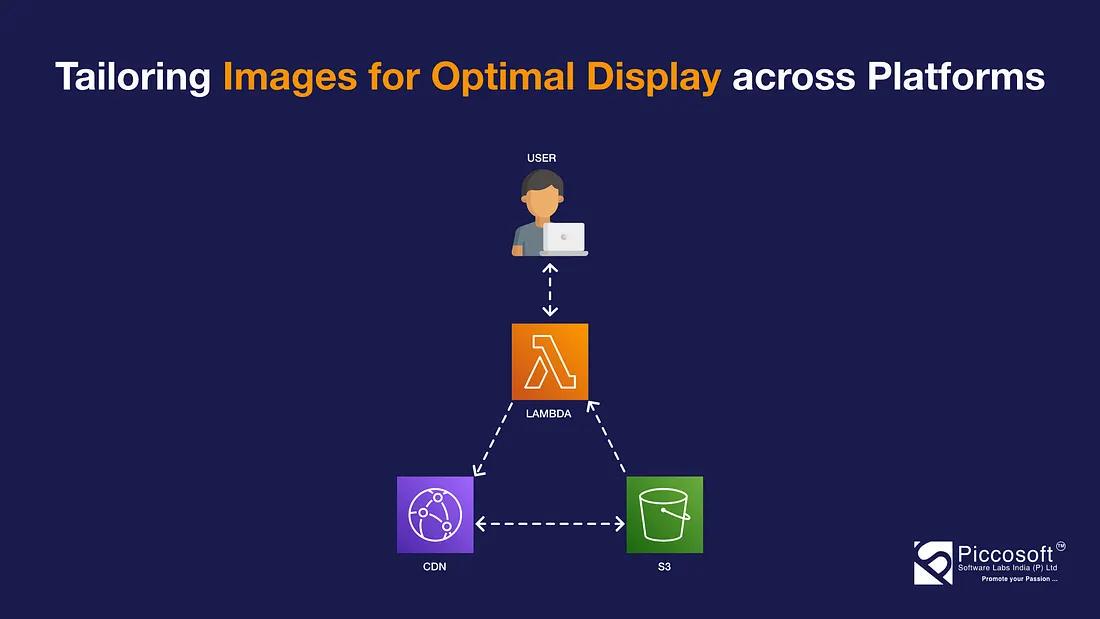
In eCommerce, where user experience reigns supreme, every second counts. Every second holds the potential to shape the narrative of user experience, forging pathways to loyalty or abandonment. From ecommerce platforms to dynamic websites, the loading speed of images can significantly impact user satisfaction, conversion rates, and even search engine rankings. Recognizing this pivotal aspect, Piccosoft have embraced a comprehensive approach to image loading optimization utilizing a combination of Lambda functions, Content Delivery Networks (CDNs), and meticulous image optimization strategies. Understanding the Approach Piccosoft have meticulously crafted a three-step process to enhance image loading performance across diverse digital landscapes. Step 1: Upload to Amazon AWS S3 Bucket The journey of image optimization begins with the upload process. Images uploaded by vendors or administrators are seamlessly stored in Amazon AWS S3 buckets. This ensures a robust and scalable infrastructure for housing images. Step 2: Lambda Function for On-the-Fly Cropping One of the cornerstones of their optimization strategy lies in the utilization of Lambda functions. These functions dynamically define different dimensions for image cropping on the fly. Especially, Instead of creating separate images for different screen sizes or resolutions, Lambda functions offer unparalleled flexibility, allowing for swift adjustments to image dimensions as per evolving platform requirements. This not only streamlines the process of accommodating design changes but also minimizes the storage overhead by maintaining a single primary image per product. Step 3: Integration with CloudFront CDN To ensure swift delivery of optimized images to end-users worldwide, applications seamlessly integrate with CDN services. When a user requests an image, CloudFront orchestrates the retrieval process, leveraging the power of S3 storage and Lambda functions for dynamic resizing and cropping. The cached images are then distributed across multiple geographical locations, reducing latency and enhancing overall user experience. Why Piccosoft Developers Prefer this Approach The rationale behind Piccosoft’s preference for this approach is multifaceted: Scalability By leveraging AWS services such as S3 storage and Lambda functions, the solution remains highly scalable, capable of accommodating fluctuations in user traffic seamlessly. Flexibility Lambda functions offer unparalleled flexibility, allowing for dynamic adjustments to image dimensions without the need for manual intervention. This agility enables rapid adaptation to changing design requirements and evolving user preferences. Performance The integration with CloudFront CDN ensures optimized content delivery to users worldwide, minimizing latency and enhancing overall application performance. By caching images in proximity to end-users, ensured swift access to image visuals, thereby augmenting user engagement and satisfaction. Cost-Efficiency Through meticulous image optimization and dynamic resizing, minimized storage overheads while maximizing resource utilization. This cost-effective approach ensures optimal performance without compromising on quality or scalability. Conclusion Piccosoft ’s approach to image optimization epitomizes a synergy of innovation, efficiency, and user-centric design. By harnessing the power of Lambda functions, CDN integration, and meticulous image optimization strategies delivers an unparalleled user experience, setting a new standard for digital platforms.
By Suresh
Lambda, CDN
More blogs

- 1
- 2
- 3
- 4
