






 React Native Development
 Angularjs 2 Development
 Angularjs Development
 Nodejs Development
Piccosoft

Picco Labs
Picco AI
Piccosoft
Blogs
Showcases blog posts as Entries, grouped into categories like Lifestyle, Technology, or Travel. Each blog uChannel for blog templatesses a Blog Template for engaging and readable layouts.
In the coding of programming languages, maintaining clarity and consistency in code is crucial for readability and maintainability. From the structure of HTML to the conventions of Python and JavaScript, adopting a cohesive coding style enhances not only the functionality of the code but also its aesthetic appeal. Here are some fundamental style suggestions that can transform tangled code into an elegant and comprehensible masterpiece: Tabs or Spaces Indentation serves as a visual cue, guiding the reader through the logical structure of the code. Whether you choose tabs or spaces, the key is to remain consistent within the project. Each language typically has its own preferred style, and adhering to these conventions fosters uniformity and readability. 2. Proper Naming Meaningful and descriptive names for functions, variables, and other entities in the code contribute significantly to its readability. Embrace the naming conventions specific to each language, such as camelCase in JavaScript orsnake_case in python, where words are in all lowercase letters and separated by underscores. Avoiding abbreviations and choosing words that accurately convey the purpose of the entity enhances clarity and understanding. Comments provide valuable insights into the logic and functionality of the code, serving as annotations for the reader. Strategic placement of concise comments helps clarify complex algorithms or intricate logic. However, it’s important to strike a balance and avoid excessive commentary, as overly verbose comments can clutter the code and detract from readability. In collaborative development environments, adherence to consistent coding style standards is essential. A unified coding style fosters cohesion among team members and facilitates seamless collaboration on projects. Just as a well-structured poem captivates its audience with its elegance and coherence, meticulously styled code transcends mere functionality, embodying the artistry of craftsmanship. Conclusion Mastering coding style is a journey that parallels the pursuit of artistic expression. By embracing indentation, employing thoughtful naming conventions, and judiciously using comments, programmers can elevate their code to new levels of clarity and coherence. Let us strive to write code that not only functions efficiently but also resonates with the beauty of well-crafted prose. As we strive for clarity and consistency in our coding practices, Piccosoft stands as a beacon of quality and innovation.
Continue reading »

In today’s world, Electric Vehicles (EVs) have emerged as champions in the quest for a greener, more sustainable future. At Piccosoft, we’re passionate about exploring cutting-edge technologies, and our recent endeavour into the world of EVs has been nothing short of exhilarating. Delving into EV Protocols Our team of developers embarked on an exciting journey to understand the intricate workings of EV technology. One of the crucial aspects we delved into was the Open Charge Point Protocol (OCPP), a protocol fundamental for managing EV charging through charging points. With meticulous attention to detail, we explored the nuances of OCPP, including socket concepts and various events such as EV vehicle connection, charging status updates, remote transactions, and online transactions. Our exploration was not merely theoretical; we put our knowledge to the test by conducting hands-on experiments. We tested the OCPP protocol using a 120V adapter with an EV vehicle, simulating both manual charging and remote charging scenarios. The Importance of EV Technology in Sustainability Through our journey, we gained valuable insights into how EV technology plays a pivotal role in promoting environmental sustainability. By understanding and harnessing the capabilities of EV protocols like OCPP, we can pave the way for more efficient and user-friendly EV charging solutions. Looking Ahead As we reflect on our exploration of EV technology, we are filled with excitement for the future. Our Commitment to exploring new technology and harnessing technology for innovations will continue. If you have a unique project that requires latest implementations using modern tech stacks, then do get in touch with us and write to sales@piccosoft.com

In recent years, voice technology has revolutionized the way we interact with our devices. With the advent of virtual assistants like Amazon Alexa, users can accomplish tasks and access information effortlessly using voice commands. In India, where technology adoption is rapidly increasing, several Alexa skills have emerged as indispensable tools for users across various domains. Narendra Modi Skill: Staying Connected with Governance In a country as vast and diverse as India, staying informed about government initiatives and policies is crucial. The Narendra Modi Skill on Alexa serves as a valuable resource, providing users with updates, speeches, and information related to Prime Minister Narendra Modi’s initiatives and activities. From Swachh Bharat to Digital India, users can stay connected with the latest developments shaping the nation’s future. Indian Railway Info: Navigating the Tracks of Travel Navigating India’s extensive railway network can be a daunting task, but Alexa simplifies the process with the Indian Railway Info skill. Users can obtain real-time information on train schedules, seat availability, and even book tickets — all through voice commands. Whether planning a weekend getaway or embarking on a cross-country journey, Indian Railway Info on Alexa ensures a smooth and hassle-free travel experience. India Today: Keeping You Informed India Today, a leading news organization, offers an Alexa skill designed to keep users informed about the latest developments across India and beyond. With the India Today Alexa skill, users can access real-time news updates, insightful analysis, and exclusive interviews, all through simple voice commands. Whether staying up-to-date on current affairs, exploring in-depth reports, or listening to expert opinions, India Today on Alexa provides a comprehensive news experience tailored to the needs of Indian audiences. Gaana: Tuning into the Melodies of India One of the standout Alexa skills in India is Gaana, a music streaming service offering access to a vast repository of Indian music. From Bollywood hits to regional tracks and curated playlists, Gaana brings the rich tapestry of Indian melodies to users’ fingertips. Whether it’s unwinding after a long day or setting the mood for a celebration, Gaana on Alexa provides an immersive musical experience tailored to Indian listeners’ preferences. Zomato: Savoring the Flavors of India Food holds a special place in Indian culture, and Zomato on Alexa brings the culinary delights of the nation to users’ doorsteps. From ordering food to discovering new restaurants and reading reviews, Zomato offers a comprehensive dining experience tailored to Indian tastes. Whether craving street food favorites or indulging in fine dining, Zomato on Alexa makes every mealtime memorable. In conclusion The real-life applications of top Alexa skills in India showcase the versatility and convenience of voice technology in enhancing everyday experiences. From enjoying music to staying informed, planning travel, and satisfying culinary cravings, Alexa skills have seamlessly integrated into the lives of Indian users, enriching their journey in the digital age. Piccosoft Software Labs India (P) Limited specializes in crafting innovative and user-centric voice interface solutions, tailored specifically to the Indian market. With expertise in developing custom Alexa skills, Piccosoft empowers businesses and entrepreneurs to leverage the full potential of voice technology. By providing comprehensive guidance and support, Piccosoft ensures seamless integration and optimal functionality, enabling clients to enhance customer engagement, drive sales, and stay ahead in the competitive landscape of the digital era.
In the realm of software testing, load testing stands as a critical process for ensuring the performance and reliability of applications under various conditions. This article delves into the intricacies of load testing, its significance in the testing landscape, and the compelling reasons why it should be an integral part of every testing strategy. What is Load Testing? Load testing is a type of software testing that evaluates the behavior of a system under specific load conditions. It simulates real-world scenarios by subjecting the system to varying levels of user activity, network traffic, or data volumes to assess its performance and response times. Importance of Load Testing: Load testing holds immense importance in the software development lifecycle for several reasons: Identifying Performance Bottlenecks: Load testing helps identify performance bottlenecks such as slow response times, high resource utilization, or system crashes under heavy loads. Optimizing Scalability: By assessing how the system handles increasing loads, load testing enables organizations to optimize scalability and ensure that the application can accommodate growing user demands. Enhancing User Experience: A well-performing application translates to better user experience, increased user satisfaction, and ultimately, higher customer retention rates. Mitigating Risks: Load testing helps mitigate risks associated with system failures, downtime, or performance degradation, thereby safeguarding the organization’s reputation and revenue. Benefits of Load Testing: Improved Performance: Load testing uncovers performance issues early in the development cycle, allowing teams to address them proactively and optimize system performance. Increased Reliability: By simulating real-world conditions, load testing ensures that the application functions reliably under expected loads, minimizing the likelihood of unexpected failures or crashes. Cost Savings: Detecting and fixing performance issues during development is more cost-effective than addressing them post-production when they can result in revenue loss, customer dissatisfaction, or brand damage. Confidence in Deployment: Successful load testing instils confidence in stakeholders regarding the application’s readiness for deployment, reducing the risk of deployment-related issues. Consequences of Neglecting Load Testing: Failure to conduct load testing can have detrimental consequences, including: Poor User Experience: Applications may suffer from slow response times, frequent timeouts, or crashes under heavy loads, leading to a poor user experience and decreased user satisfaction. Lost Revenue Opportunities: Downtime or performance degradation during peak usage periods can result in lost revenue opportunities, especially for e-commerce or online service providers. Damage to Reputation: System failures or performance issues can tarnish the organization’s reputation, leading to negative publicity, loss of customer trust, and brand damage. Increased Costs: Addressing performance issues post-production is more costly and time-consuming than detecting and fixing them during the development phase, resulting in increased expenses and project delays. Real-time case studies where load testing proved invaluable: E-commerce Platform Success: A leading e-commerce platform planned a major promotional event to attract a surge in traffic. Prior to the event, load testing was conducted to assess the platform’s readiness. The load testing revealed performance bottlenecks in the checkout process under high loads. With this insight, the development team optimized the checkout process and increased server capacity. As a result, during the promotional event, the platform handled the increased traffic seamlessly, resulting in a significant increase in sales and customer satisfaction. Financial Services Application Reliability: A financial services company developed a new online banking application to serve its growing customer base. Load testing was conducted to evaluate the application’s performance under varying transaction loads. The testing identified a critical issue where the application experienced slowdowns during peak hours due to database latency. Armed with this information, the development team implemented caching mechanisms and database optimizations. Subsequent load testing confirmed that the application could handle high transaction volumes without compromising performance, ensuring uninterrupted service for customers. Gaming Platform Scalability: A gaming company was preparing for the launch of a highly anticipated multiplayer game. Load testing was performed to assess the game’s server infrastructure and network capabilities under heavy concurrent player loads. The testing revealed that the servers struggled to handle the expected number of players, resulting in latency issues and game disconnects. In response, the infrastructure was scaled up, and optimizations were made to improve server performance. As a result, when the game launched, players experienced smooth gameplay with minimal disruptions, leading to positive reviews and increased player engagement. Conclusion In conclusion, load testing is not just a recommended practice but a crucial necessity in today’s software development landscape. By systematically assessing performance under varying loads, organizations can optimize system performance, enhance user experience, and safeguard against potential risks. Neglecting load testing can have far-reaching consequences, including poor user experience, lost revenue opportunities, damage to reputation, and increased costs. Therefore, investing in comprehensive load testing strategies is essential for ensuring the success and longevity of software applications in an increasingly competitive digital world. At Piccosoft , one of the fast-growing software development companies in India, we understand the significance of load testing in ensuring the reliability and scalability of software applications. With expertise in various technologies including Node.js, Golang, React, Angular, Flutter, and PHP, coupled with a dedicated testing team, we offer comprehensive load testing services to identify and address performance bottlenecks proactively. By leveraging our proficiency in both development and testing, we empower organizations to deliver high-quality, high-performance software solutions that meet the demands of today’s dynamic digital landscape.
Next.js has emerged as one of the most popular frameworks for building modern web applications. Its versatility, performance, and developer-friendly features make it a top choice for many projects. However, becoming proficient in Next.js requires more than just technical skills. Successful Next.js developers possess a combination of qualities that enable them to excel in their roles. In this article, we’ll explore the essential qualities that every Next.js developer should strive to cultivate. Proficiency in React Next.js is built on top of React, so it goes without saying that proficiency in React is a fundamental requirement for Next.js developers. Understanding React’s component-based architecture, state management, and JSX syntax is crucial for effectively building applications with Next.js. Developers should be comfortable working with React concepts such as hooks, context, and lifecycle methods to create dynamic and responsive user interfaces. Since Next.js is primarily a JavaScript framework, having a strong foundation in JavaScript is essential. Next.js developers should be well-versed in core JavaScript concepts such as functions, scope, closures, and asynchronous programming. Additionally, familiarity with ES6+ features like arrow functions, template literals, destructuring, and spread syntax is indispensable for writing clean and concise code in Next.js projects. Understanding of SSR and SSG One of Next.js’s key features is its support for server-side rendering (SSR) and static site generation (SSG). Next.js developers should have a solid understanding of how SSR and SSG work and when to leverage each approach based on the requirements of the project. They should be able to optimize performance by efficiently rendering pages on the server or generating static assets at build time, depending on factors such as dynamic content, SEO considerations, and user experience. Familiarity with Node.js and Express Next.js applications often require server-side logic for handling API requests, data fetching, and other backend operations. Therefore, Next.js developers should have a good understanding of Node.js and Express, which are commonly used for building server-side functionality in Next.js projects. Knowledge of RESTful API design principles, middleware, routing, and database interactions is valuable for implementing server-side features effectively. Experience with CSS and Styling Creating visually appealing and responsive user interfaces is a significant aspect of web development, and Next.js developers should be proficient in CSS and styling techniques. They should have experience with CSS preprocessors like Sass or Less, as well as modern CSS frameworks like Tailwind CSS or Styled Components, which integrate seamlessly with Next.js. Additionally, knowledge of CSS-in-JS solutions can help developers manage styling more efficiently within their Next.js applications. Attention to Performance and Optimization Performance is critical for delivering a great user experience, especially in web applications. Next.js developers should prioritize performance optimization techniques such as code splitting, lazy loading, image optimization, and bundle size reduction to ensure fast load times and smooth interactions. They should also be familiar with tools like Lighthouse, Web Vitals, and Next.js analytics to measure and improve performance metrics continuously. Problem-Solving Skills Building complex web applications with Next.js often involves encountering and resolving various challenges and bugs along the way. Next.js developers should possess strong problem-solving skills and a knack for troubleshooting issues efficiently. They should be able to analyse problems, identify root causes, and implement effective solutions, whether it involves debugging code, refactoring components, or optimizing performance. Collaboration and Communication Next.js development is rarely a solitary endeavour, especially in team-based environments. Next.js developers should be adept at collaborating with designers, product managers, and other developers to translate requirements into functional and visually appealing features. Clear and effective communication skills are essential for articulating ideas, discussing technical solutions, and providing updates on project progress. Conclusion In conclusion, becoming a proficient Next.js developer demands more than just technical prowess. It necessitates a diverse skill set encompassing proficiency in React, solid JavaScript fundamentals, comprehension of server-side rendering (SSR) and static site generation (SSG), familiarity with Node.js and Express, adeptness in CSS and styling, a keen eye for performance optimization, strong problem-solving abilities, and effective collaboration and communication skills. By nurturing these vital qualities, Next.js developers at Piccosoft can craft top-tier web applications that not only fulfil user requirements but also align with the objectives of stakeholders. Through continuous growth and refinement of these competencies, Piccosoft’s Next.js developers can consistently deliver exceptional solutions that propel the company and its clients towards success in the ever-evolving digital landscape.
MORE BLOGS

13 Mar 2024 , 10:00 PM
Leading the Charge: Piccosoft Software Labs and the Pursuit of Tech Innovation
In the ever-evolving world of software development, Piccosoft Software Labs stand tall as a beacon of innovation. This article delves into why Piccosoft Software Labs is at the forefront of technology adoption, showcasing how our commitment to embracing cutting-edge tech stacks ensures unparalleled solutions for our clients. Innovation Drives Our Mission: At Piccosoft Software Labs, innovation is not just a buzzword; it’s a driving force behind everything we do. Our relentless pursuit of new technologies stems from a desire to push boundaries, challenge norms, and deliver groundbreaking solutions. By embracing the latest tech stacks, we empower our teams to explore uncharted territories, leading to the creation of software that transcends expectations. Efficiency and Agility: In today’s fast-paced business landscape, efficiency and agility are paramount. New tech stacks often come bundled with tools and methodologies that streamline development processes, allowing us to deliver solutions with unprecedented speed and precision. By staying ahead of the curve, Piccosoft Software Labs ensures that our clients receive not just innovative solutions but also timely ones, giving them a competitive edge in their respective markets. Adaptability in a Dynamic Environment: The software development landscape is constantly evolving, with new challenges and opportunities emerging at every turn. Piccosoft Software Labs understands the importance of adaptability in such a dynamic environment. By embracing new tech stacks, we equip ourselves with the flexibility and resilience needed to navigate changing landscapes, ensuring that our solutions remain relevant and effective regardless of the challenges we face. Motivating Our Team: Motivation is at the heart of everything we do at Piccosoft Software Labs. Our commitment to embracing new technologies isn’t just about attracting talent; it’s about motivating our team to push the boundaries of what’s possible. By providing our developers with opportunities to work with cutting-edge tools and methodologies, we fuel their passion for innovation and inspire them to deliver their best work every day. Maintaining a Competitive Edge: In a crowded marketplace, differentiation is key to success. By embracing new tech stacks, Piccosoft Software Labs distinguishes itself as an industry leader. Our solutions are not just innovative; they’re revolutionary, setting new benchmarks for excellence and pushing the boundaries of what’s possible. For clients seeking a partner that can deliver exceptional results, Piccosoft Software Labs is the obvious choice. Conclusion At Piccosoft Software Labs, innovation isn’t just a goal; it’s a way of life. Our commitment to embracing new technologies ensures that we remain at the forefront of the industry, delivering solutions that are not just innovative but transformative. Whether you’re looking to streamline your operations, enhance your customer experience, or disrupt your industry, Piccosoft Software Labs has the expertise, experience, and passion to bring your vision to life. Choose us as your partner in innovation, and together, we’ll shape the future of software development.
By Suresh
Tech, Piccosoft
06 Mar 2024 , 10:00 AM
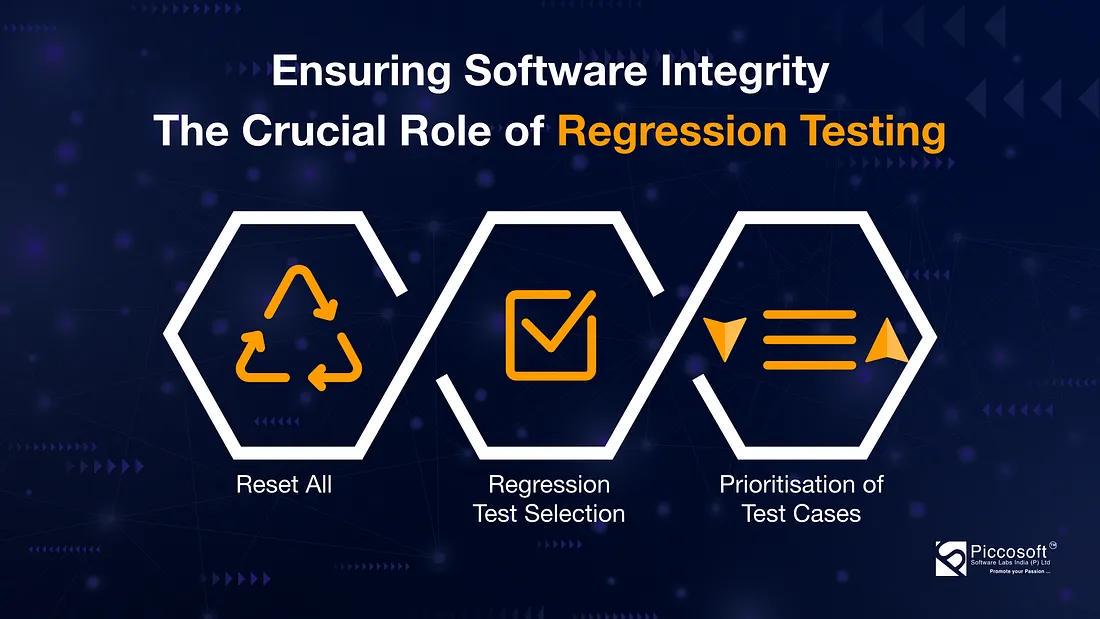
Safeguarding Software Stability: The vital role of Regression Testing
As software evolves to meet ever-changing demands, the risk of inadvertently disrupting existing features grows. Regression testing steps up as the vigilant sentinel, tirelessly guarding against the emergence of regression bugs with each code modification. Understanding Regression Testing Regression testing is a quality assurance practice that verifies that recent code changes haven’t adversely affected existing features or functionalities. It involves re-running previously executed test cases to ensure that the existing functionalities still perform as expected after any code modifications. Ultimately, the goal of regression testing is to ensure the stability and reliability of the software. By systematically checking for regressions, teams can maintain confidence in the integrity of the application, even as it undergoes continuous development and updates. Why Regression Testing Matters Imagine a scenario: A software application undergoes a significant update to introduce exciting new features. However, upon deployment, users start reporting issues with functionalities that were working perfectly fine before the update. This is a classic case of regression bugs slipping through the development process. Regression testing aims to prevent such situations by detecting and fixing regressions early in the development cycle, thereby minimizing potential risks and ensuring a seamless user experience. Types of Regression Testing Unit Regression Testing This involves testing individual units or components of the software in isolation to ensure that changes in one part of the codebase don’t negatively impact other components. Integration Regression Testing Here, the focus is on testing the interactions between different modules or subsystems to detect any regressions introduced by integration changes. System Regression Testing This level of testing examines the system as a whole to verify that all integrated components function correctly together after code changes. Selective Regression Testing Instead of re-running the entire test suite, selective regression testing involves prioritizing test cases based on the areas of the application affected by recent code changes. This approach optimizes testing efforts while still ensuring comprehensive coverage. Regression Testing Best Practices Automation Given the repetitive nature of regression testing, automation is crucial for its efficient execution. Test automation frameworks like Selenium, JUnit, or PyTest enable developers to automate the execution of test cases, saving time and effort. Continuous Integration and Continuous Deployment (CI/CD) Integrating regression testing into CI/CD pipelines ensures that tests are automatically triggered whenever code changes are made. This allows for early detection of regressions and facilitates rapid feedback loops. Version Control Utilizing version control systems such as Git enables developers to track changes to the codebase and easily revert to previous versions if regressions are detected. Comprehensive Test Coverage Ensuring that the regression test suite covers critical functionalities and edge cases helps minimize the risk of undiscovered regressions. Challenges in Regression Testing Resource Intensive: Running regression tests, especially for large and complex software systems, can be time-consuming and resource-intensive. Test Maintenance: As the codebase evolves, maintaining and updating regression test suites to reflect changes in the application can be challenging. Test Prioritization: With limited time and resources, prioritizing which test cases to include in regression testing becomes crucial to maximize test coverage. Conclusion Regression testing plays a vital role in software development by mitigating the risk of regressions and ensuring the stability and reliability of software applications. By adopting best practices such as test automation, continuous integration, and comprehensive test coverage, development teams can effectively incorporate regression testing into their workflows, delivering high-quality software products that meet user expectations. By partnering with Piccosoft , organizations can leverage their proficiency in test automation, continuous integration, and comprehensive test coverage to mitigate the risk of regressions effectively. Together, they can deliver high-quality software products that not only meet but exceed user expectations, setting new benchmarks for excellence in the industry.
By Raja
Regression Testing

28 Feb 2024 , 10:00 AM
Revitalizing Your Node.js Application: A Journey Towards Clean Architecture
In the ever-evolving landscape of Node.js development, maintaining a clean and scalable architecture is crucial for the long-term success of your applications. In this article, we’ll explore the process of refactoring a complicated location-checking mechanism out of the viewer into a dedicated class, bringing clarity and maintainability to your Node.js project. Embracing Clean Architecture NodeToWidgetMap: A Dedicated Class One of the key principles of clean architecture is separating concerns to enhance modularity and ease of maintenance. Enter the NodeToWidgetMap, a dedicated class that encapsulates the logic for mapping nodes to widgets. This separation allows for targeted improvements without affecting the rest of your Node.js program. Model-View-Controller (MVC) Architecture Taking inspiration from the Model-View-Controller architecture, your tree structure and its nodes become the models, while the viewer and widgets represent the views. The logic for selecting widgets based on nodes becomes a part of the controller. This structured approach enhances organization and makes your codebase more understandable. Strategizing NodeToWidgetMap When to Choose: Node Lifetime and Location Consider the lifecycle of your widgets concerning nodes. If the widget choice remains constant throughout the node’s lifetime, selection can occur during node creation. Otherwise, understanding the location, possibly through the XML path, becomes crucial. Storing pointers to nodes (using, for example, boost::shared_ptr) allows flexibility in managing node relationships. Finding Parent Nodes Efficiently finding parent nodes is pivotal. You might choose to update child nodes whenever the parent node is modified, or alternatively, implement a Node::findParentOf(node) function. These strategies ensure a scalable solution for both small and large tree structures. Choosing the Right Widget Rather than relying on regular expressions for matching XML paths, consider creating a lookup graph. This graph, with edges labeled by XML element names, helps navigate the XML structure efficiently. The XML path then becomes a route through this graph, simplifying the process of choosing the right widget. Where to Store Choices: Node ID Mapping Associate a unique numeric ID with each node and record widget choices using a map from node ID to widget inside the NodeToWidgetMap. This mapping strategy ensures a clear and efficient way of associating nodes with their corresponding widgets. Rewriting vs. Refactoring The decision between rewriting and refactoring depends on your project’s goals and timelines. A complete rewrite allows for a fresh perspective, while refactoring step by step ensures a usable version after each enhancement. Choose based on your preference for more programming joy or a strategic balance between progress and rethinking. Conclusion In the dynamic realm of Node.js development, embracing clean architecture and strategic refactoring can breathe new life into your applications. The NodeToWidgetMap, inspired by MVC principles, exemplifies how separating concerns and strategizing your approach can lead to a more maintainable and scalable Node.js project. Whether you opt for a complete rewrite or incremental improvements, the journey towards clean architecture is a rewarding one in the ever-evolving landscape of Node.js development. At Piccosoft , we embody a commitment to excellence in Node.js development by adhering to the principles of clean architecture and strategic refactoring. By embracing dedicated classes such as NodeToWidgetMap and adopting the MVC architecture, we ensure that our code remains modular, scalable, and easy to maintain. Our approach involves thoughtful consideration of node lifecycle, efficient parent node finding, and strategic widget selection, all while utilizing robust mapping mechanisms. Whether we choose a complete rewrite or opt for incremental enhancements, our goal is to deliver high-quality solutions that stand the test of time in the dynamic landscape of Node.js development.
By Suresh
NodeJS, Architecture

08 Feb 2024 , 10:00 AM
Elevating Customer Experiences: ChatGPT Integration Solutions by Piccosoft
In the era of digital storefronts and surging online shopping trends, maintaining the magic of personal touch is more crucial than ever. McKinsey’s research underscores the significance of personalized interactions, revealing that 76% of consumers express satisfaction with personalized experiences, translating into a 40% revenue increase for adept companies. Conversely, unmet customer expectations lead to a staggering 30% of online purchases being returned. Enter ChatGPT, the beacon of personalized online customer experiences. Powered by the advanced GPT-4 model, ChatGPT is not just another tech trend; it’s a game-changer. With its ability to understand and adapt to each conversation, ChatGPT ensures that every interaction is uniquely personal, making customers feel heard, valued, and understood. ChatGPT for business advancement ChatGPT, developed by OpenAI, is renowned for its exceptional ability to understand and replicate human-like text, making it a premier choice for AI-driven customer service in mobile apps. Its integration goes beyond simple conversations, offering versatile and nuanced user interactions that elevate the overall user experience. Here’s how ChatGPT integration enhances user experiences in mobile apps: Personalized Customer Support with Contextually Aware Responses Tailored User Interaction Based on Unique Preferences and Behaviours Comprehensive User Interaction through Multi-File Data Analysis and Insight Generation Enhanced Conversational Efficiency and Real-Time Responsiveness Customizable User Journey through Integration of Varied Third-Party Plugins Enhanced chatgpt personalised interactions ChatGPT’s sophisticated capabilities enable it to efficiently identify and suggest, effectively addressing intricate user inquiries. This exemplifies ChatGPT’s prowess in customer service chatbots, enhancing user experiences with personalized recommendations seamlessly integrated into the app’s product offerings, thereby streamlining the selection process. Let’s showcase the travel guide functionality within an app, providing users with personalized recommendations and expert guidance to enhance their journey. Before ChatGPT Integration: User: “I’m planning a trip to Europe. Any recommendations?” ChatGPT: “Sure, which countries are you interested in visiting?” User: “Looking for a beach destination for a family vacation.” ChatGPT: “Beach destinations like Hawaii or the Caribbean are popular choices.” User: “Need advice on finding budget accommodations in New York City.” ChatGPT: “You can try searching for budget hotels or Airbnb options in the city.” After ChatGPT Integration and Training: User: “I’m planning a trip to Europe. Any recommendations?” ChatGPT: “Absolutely! Our ‘European Adventure Package’ offers a customizable itinerary covering iconic cities like Paris, Rome, and Barcelona, along with insider tips on hidden gems and local experiences. Would you like to explore this option further?” User: “Looking for a beach destination for a family vacation.” ChatGPT: “I recommend our ‘Family Beach Getaway’ to the beautiful shores of Maui. Our package includes family-friendly accommodations, water sports activities, and guided tours to ensure a memorable vacation for all ages. Interested in learning more?” User: “Need advice on finding budget accommodations in New York City.” ChatGPT: “Consider our ‘Budget-Friendly NYC Escape.’ We’ve curated a list of affordable hotels and cozyAirbnb options in convenient locations across the city. Plus, we’ll share insider tips on free attractions and dining deals to help you make the most of your stay. Shall we get started?” Elevating Travel Planning with ChatGPT: In the realm of travel planning, the integration of ChatGPT enhances the customer experience by providing personalized recommendations and expert guidance. By understanding travellers’ preferences and needs, ChatGPT streamlines the planning process and offers tailored solutions that align with their interests and budget. Elevating Customer Experiences in modern business with ChatGPT ChatGPT has witnessed a surge in adoption across modern businesses, revolutionizing customer service and operational efficiency. Its impact is evident in various sectors, with notable statistics showcasing its significance. For instance, according to recent surveys, over 60% of businesses have integrated AI chatbots like ChatGPT into their customer service channels, leading to a significant improvement in response times and customer satisfaction. One real-time example of ChatGPT’s impact is in the e-commerce industry. Companies such as Amazon and Shopify use ChatGPT to provide personalized product recommendations, answer customer queries, and facilitate seamless transactions. This has resulted in higher conversion rates, increased sales, and enhanced customer retention. India’s leading online travel company, MakeMyTrip, utilizes AI chatbots to assist customers with travel bookings, itinerary planning, and customer support. Their chatbot, named “Myra,” employs natural language processing to understand user queries and provide personalized recommendations, enhancing the overall user experience. The Indian Railway Catering and Tourism Corporation (IRCTC) has implemented AI-powered chatbots to handle customer inquiries, ticket bookings, and other railway-related services. These chatbots assist millions of passengers daily, streamlining the ticket booking process and providing timely information on train schedules and availability. Oyo, a hospitality company known for its budget hotel accommodations, employs AI-driven chatbots to interact with guests and handle customer service inquiries. These chatbots assist guests with booking reservations, checking availability, and addressing any concerns or issues during their stay. Yatra, a popular online travel agency in India, leverages AI technology to enhance its customer service offerings. Their AI-powered virtual assistant, “YUVA,” assists users with travel bookings, itinerary planning, and travel-related queries, ensuring a seamless and personalized experience for travellers. Strategic ChatGPT Implementation Integration of ChatGPT is pivotal for its success, as rushed or superficial approaches can lead to notable issues. Consider an e-commerce platform that saw a dip in customer satisfaction due to ChatGPT’s delivery of irrelevant or repetitive responses, resulting in negative feedback and user frustration. The stages of proficient ChatGPT integration encompass: Needs Assessment: Thoroughly understanding the unique requirements of the business and how ChatGPT can effectively address them. Custom Training: Tailoring ChatGPT’s responses to mirror the company’s tone and precisely meet the diverse needs of customers. Data Integration: Guaranteeing ChatGPT has access to pertinent and up-to-date information to furnish accurate responses. User Feedback Analysis: Constantly scrutinizing user interactions to pinpoint areas for enhancement and refine ChatGPT’s performance. Regular Updates: Ensuring ChatGPT’s model remains abreast of the latest advancements, aligning it with evolving business dynamics and customer preferences. Conclusion The successful integration of ChatGPT represents a pivotal milestone in the evolution of AI technology, offering businesses unparalleled opportunities to enhance customer experiences and streamline operations.Whether it’s providing personalized recommendations, improving customer support, or automating repetitive tasks, ChatGPT’s capabilities are reshaping industries across the globe. With a meticulous approach to customization and optimization, Piccosoft ensures that ChatGPT seamlessly aligns with each client’s unique objectives and customer expectations. Through innovative solutions and unwavering commitment to client success, Piccosoft emerges as a trusted partner in the digital transformation journey, empowering businesses to leverage ChatGPT’s capabilities effectively and stay ahead in today’s competitive market landscape.
By Raja
ChatGPT

24 Jan 2024 , 10:00 AM
Accelerating Quality: Piccosoft’s Mastery in Automation Testing
In the dynamic realm of software development, staying ahead requires not only innovation but also efficiency in delivering high-quality products. Automation testing stands out as a game-changer, and when coupled with industry-leading tools like Selenium and LambdaTest, it becomes a powerhouse for ensuring software reliability. In this article, let us understand the transformative impact of automation testing and integrate cutting-edge tools to elevate the testing experience. Real-Life Example: Selenium and LambdaTest in Action Imagine a scenario where Selenium, an open-source framework for testing web applications, collaborates with LambdaTest, a cloud testing tool boasting a Selenium grid with over 3000 browsers and operating systems. This partnership allows for seamless automation, enabling parallel tests on an online browser farm. No need to worry about browser configurations or downloads; LambdaTest’s online Selenium grid provides a hassle-free testing environment. The collaboration to streamline testing processes, ensures optimal efficiency and comprehensive test coverage. Applications of Automation Testing Scalability and Load Testing Test applications under a load of 100,000 users. Scale applications seamlessly to meet growing demands. Cross-Browser and Cross-Platform Testing Conduct tests in parallel on different browsers and operating systems. Ensure consistent performance across diverse environments. Data and Image Comparison Compare extensive spreadsheets with thousands of rows and columns. Pixel-by-pixel image comparison for precision and accuracy. Why Piccosoft Embraces Automation Testing: Real-World Use Cases In the real-world scenario of continuous software development, where new features are rolled out in sprints, automated testing becomes indispensable. Consider a situation where a team identifies ten bugs in the first sprint. With automated testing, regression tests can be seamlessly executed, ensuring that older workspaces remain unaffected by bug fixes. As the number of features and bugs increases, manual testing becomes cumbersome, making automation the preferred choice for maintaining software quality. The Automation Testing Process: A Step-by-Step Guide Tool Selection Choose industry-standard tools like Selenium for code-based automated testing. Leverage frameworks that align with the specific testing requirements. Precise Test Case Definition Define test cases meticulously, leaving no room for assumptions. Consider every step and the desired result to ensure thorough testing. Test Script Preparation Convert test cases into executable scripts for the chosen framework. Validate scripts across different browsers and environments. Execution and Evaluation Run automated tests and analyse results. Address any issues promptly, ensuring accurate and reliable test outcomes. Advantages of Automation Testing Detailed Reporting In-depth, detailed test case scenarios provide comprehensive insights. Swift deployment of well-crafted test scripts ensures efficiency. Improved Defect Detection Automation facilitates the detection of defects across a broader spectrum. Analysis capabilities surpass human limitations, ensuring robust testing. Simplified Testing Reusable test scripts streamline testing operations. Automation eliminates the need to rewrite code for repeated test cases. Reduced Human Intervention Testing can be performed at any time, minimizing the need for constant human supervision. The risk of human error is significantly reduced through automation. Time and Cost Savings While an initial investment may be required, automation proves cost-effective in the long run. Team members focus on strategic areas, reducing the need for manual testing. Conclusion By embracing automation, Piccosoft ensures accelerated software releases, improved reliability, and cost-effective testing solutions. In a landscape where efficiency and quality are paramount, Piccosoft stands as a beacon of innovation, leveraging automation to propel organizations toward success in the competitive world of software development.
By Suresh
Automation Testing
More blogs

- 1
- 2
- 3
- 4
