






 React Native Development
 Angularjs 2 Development
 Angularjs Development
 Nodejs Development
Piccosoft

Picco Labs
Picco AI
Piccosoft
Blogs
Showcases blog posts as Entries, grouped into categories like Lifestyle, Technology, or Travel. Each blog uChannel for blog templatesses a Blog Template for engaging and readable layouts.
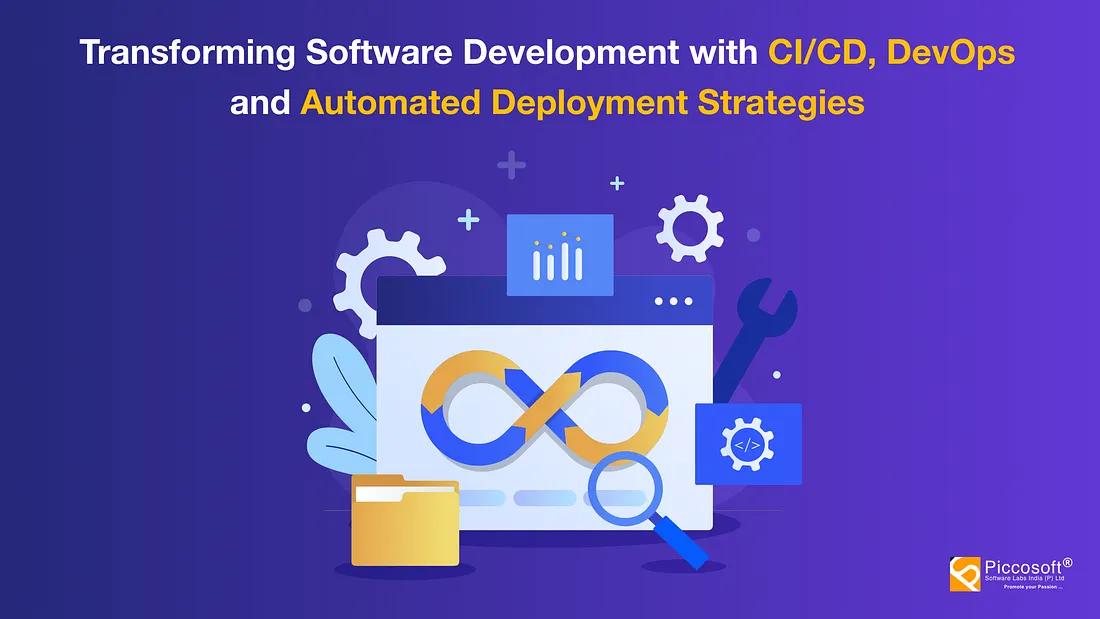
In the ever-evolving landscape of software development, the adoption of cutting-edge methodologies has become a game-changer. Continuous Integration (CI), Continuous Deployment (CD), and the overarching principles of DevOps have emerged as pivotal elements, revolutionizing how software is developed, tested, and deployed. This article delves into the core concepts of CI/CD, DevOps, and automated deployment strategies, exploring how they synergize to enhance efficiency, collaboration, and overall software development processes. Continuous Integration (CI): The Foundation of Collaboration Continuous Integration is the practice of regularly integrating code changes into a shared repository. This process ensures that multiple contributors’ code is automatically merged, preventing integration issues and conflicts. CI promotes collaboration among development teams, accelerates the identification of bugs, and maintains a consistent and reliable codebase. Continuous Deployment (CD): Rapid and Reliable Release Cycles Continuous Deployment takes the principles of CI a step further by automating the entire release process. It involves automatically deploying code changes to production after passing the necessary tests in the CI phase. CD enables rapid and reliable release cycles, reducing the time between code completion and its availability to end-users. This approach enhances software delivery speed while maintaining a focus on quality and stability. DevOps: Bridging the Gap between Development and Operations DevOps, a cultural and collaborative approach to software development, aims to break down silos between development and operations teams. By emphasizing communication, collaboration, and automation, DevOps fosters a seamless integration of CI/CD into the software development lifecycle. It aligns development goals with operational objectives, resulting in faster development cycles, increased deployment frequency, and improved overall efficiency. Automated Deployment Strategies: Streamlining Release Processes Automated Deployment Strategies involve the use of tools and scripts to automate the process of deploying software applications. These strategies complement CI/CD and DevOps by ensuring consistency in deployment, reducing human error, and facilitating rollbacks in case of issues. Whether utilizing blue-green deployments, canary releases, or rolling deployments, automated strategies enhance the reliability and predictability of software releases. Benefits of CI/CD, DevOps, and Automated Deployment Faster Time-to-Market The integration of CI/CD, DevOps, and automated deployment accelerates the software development lifecycle, allowing organizations to deliver features and updates to users faster. Improved Collaboration DevOps fosters collaboration between traditionally siloed development and operations teams, creating a more cohesive and efficient working environment. Enhanced Quality and Reliability Continuous testing and automated deployment strategies contribute to higher software quality, as issues are identified and resolved early in the development process. Scalability and Flexibility CI/CD pipelines and automated deployment strategies are scalable, adapting to the needs of growing and evolving software projects without sacrificing efficiency. Conclusion The integration of Continuous Integration, Continuous Deployment, and DevOps practices, along with automated deployment strategies, represents a paradigm shift in the world of software development. By fostering collaboration, enhancing speed, and ensuring the reliability of software releases, these methodologies empower development teams to meet the demands of an ever-changing digital landscape. In this transformative journey, companies seek partners that understand the nuances of modern software development methodologies. Piccosoft emerges as a beacon in this landscape, offering comprehensive solutions that align seamlessly with the principles of CI/CD, DevOps, and automated deployment.
Continue reading »
In the dynamic landscape of backend development, two prominent players, Golang and Node.js, continue to shape the digital realms. As we stand on the precipice of 2023, the decision-making process between these technologies becomes crucial, considering factors like security, scalability, and maintainability. This article aims to guide developers and decision-makers by evaluating key performance metrics such as scalability, efficacy, concurrency, error handling, learning curve, community involvement, and more. Golang: A Robust Contender What is Golang? Golang, or Go, stands as a statically typed programming language born out of Google’s necessity for improved performance. Drawing inspiration from Python for speed and C for safety, Golang has gained substantial acclaim as an open-source language with a focus on efficiency and simplicity. Adoption and Milestones Secured the 5th spot in the Stack Overflow 2020 survey, showcasing its growing popularity. Goroutines contribute to cleaner and concise source code, allowing for efficient concurrent programming. Golang developers command an average hourly rate of around $44, as per Upwork data, indicating a high demand for their expertise. Advantages of Golang Efficiency and Simplicity Golang’s syntax and design prioritize efficiency, making it well-suited for projects where performance is critical. Vibrant Community Support The active Golang community ensures ongoing development, support, and a wealth of resources for developers. Robust Toolset Golang’s toolset facilitates effective development, debugging, and profiling of applications. Automated Memory Management Golang’s garbage collector ensures automated memory management, reducing the risk of memory leaks. Forward and Backward Compatibility Golang’s commitment to compatibility makes it a reliable choice for long-term projects. Scalability at Its Core Golang’s design, including Goroutines and channels, enables easy scalability for concurrent tasks. Node.js: The Versatile JavaScript Runtime What is Node.js? Node.js, a dynamically typed runtime environment built on JavaScript, has evolved into a potent tool for both backend and frontend development. With the foundation on Chrome’s V8 JavaScript engine, Node.js provides a versatile and cross-platform solution for web application development. Adoption and Milestones Secured the first position in the Tools, Frameworks, and Library category in the 2017 and 2018 Tech Overflow Surveys, highlighting its widespread adoption. Node.js’s non-blocking, event-driven architecture has contributed to significant scalability improvements for LinkedIn, resulting in a 50% reduction in response times during peak usage. Golang developers command an average hourly rate of around $44, as per Upwork data, indicating a high demand for their expertise. Advantages of Node.js Remarkable Performance and Efficiency Node.js leverages the V8 engine for high-performance execution of JavaScript, making it suitable for real-time applications. Versatile Cross-Platform Support Node.js supports multiple platforms, providing flexibility for diverse deployment scenarios. Inherent Scalability The event-driven and asynchronous architecture of Node.js facilitates scalability, particularly in handling a large number of concurrent connections. Abundant Package Ecosystem Node.js has a rich ecosystem of packages and modules available through npm, simplifying development and enhancing productivity. Event-driven and Asynchronous Architecture Node.js’ event-driven model enables non-blocking I/O operations, enhancing responsiveness and scalability. Choosing Between Golang and Node.js for Web Development Performance and Concurrency Golang: Excels in high-performance scenarios with its compiled nature and efficient concurrency model using Goroutines. Node.js: Leverages the V8 engine for efficient execution and asynchronous, event-driven architecture, making it suitable for handling concurrent connections. Ease of Learning and Community Support Golang: Known for simplicity and readability, Golang has a straightforward learning curve and a growing community. Node.js: Inherits JavaScript’s syntax, providing familiarity for many developers. Its extensive npm ecosystem and large community contribute to robust support. Use Case Suitability Golang: Ideal for microservices, network servers, and applications requiring high performance and scalability. Node.js: Well-suited for scalable network applications, real-time applications, and projects where rapid development is crucial. Scalability and Deployment Golang: Built with scalability in mind, Golang’s concurrency model and efficiency make it a strong choice for scalable applications. Deployment is simplified with standalone binaries. Node.js: Known for handling a large number of concurrent connections, Node.js is scalable and easily deployable on various cloud platforms, making it versatile for different hosting environments. Conclusion: Making the Optimal Choice In conclusion, the decision between Golang and Node.js for web development in 2023 hinges on the nature of your project. Consider the type of web application you envision, factoring in both technical and business considerations. If uncertainty persists, seek guidance to ensure the optimal choice for your project’s success in the evolving landscape. Piccosoft brings a wealth of experience and a client-centric approach to the table. As a technology partner, Piccosoft is adept at harnessing the capabilities of both Golang and Node.js, ensuring that your project aligns seamlessly with the dynamic demands of the digital landscape.
Explore the transformative power of Alexa Voice Interface. Piccosoft specializes in Alexa skill development, offering tailored solutions for immersive voice experiences. In the dynamic landscape of voice technology, Alexa has emerged as a powerful tool that extends beyond basic commands. Let’s delve into 10 innovative use cases where businesses and industries can implement Alexa Voice Interface to enhance user experiences and streamline operations: Hospitality Excellence: Elevate the guest experience in the hospitality industry by integrating Alexa Voice Interface for room service requests, personalized recommendations, and seamless communication between guests and staff. Example: User: “Alexa, can I order room service?” / Alexa: “Certainly! What items would you like to order?” Educational Empowerment: Transform the educational ecosystem by incorporating Alexa Voice Interface into school apps. Parents, teachers, and students can benefit from voice commands for accessing homework details, exam schedules, and school event information. Example: User: “Alexa, what is my child’s homework for today?” / Alexa: “Your child’s homework for today includes math exercises and a science project.” Healthcare Convenience: Enhance healthcare services with Alexa Voice Interface for patients. Offer features such as appointment scheduling, medication reminders, and health information retrieval through intuitive voice commands. Example: User: “Alexa, when is my next doctor’s appointment?” / Alexa: “Your next appointment is scheduled for next Tuesday at 2 PM. Would you like a reminder?” Real Estate Engagement: Revolutionize property exploration in the real estate sector with Alexa Voice Interface. Users can enjoy virtual property tours, learn about features, and inquire about pricing through interactive voice commands. Example: User: “Alexa, show me virtual tours of three-bedroom apartments.” / Alexa: “Sure! Here are virtual tours for three-bedroom apartments in your preferred location.” Smart Home Automation: Alexa becomes the central hub for smart home devices, allowing users to control lights, thermostats, security systems, and more. Create a seamless and convenient smart home experience through voice commands. Example: User: “Alexa, dim the lights in the living room.” / Alexa: “Dimming the lights in the living room as requested.” Retail Personalization: Implement Alexa Voice Interface in retail settings to provide personalized shopping experiences. Users can inquire about products, check availability, and receive tailored recommendations through voice commands. Example: User: “Alexa, can you recommend a laptop for gaming?” / Alexa: “Certainly! Based on your preferences, I recommend the XYZ gaming laptop. It’s currently on sale.” Entertainment Hub: Transform Alexa into an entertainment hub by allowing users to play music, set up playlists, and control compatible streaming services with voice commands. Provide a hands-free and immersive entertainment experience. Example: User: “Alexa, play my workout playlist.” / Alexa: “Playing your workout playlist. Let’s get energized!” Automotive Assistance: Integrate Alexa Voice Interface into vehicles to offer hands-free navigation, music control, and communication features. Enhance driver safety and convenience on the road. Example: User: “Alexa, navigate to the nearest gas station.” / Alexa: “Navigating to the nearest gas station. Estimated time of arrival is 10 minutes.” Travel and Tourism Exploration: Enrich the travel experience by implementing Alexa Voice Interface in travel and tourism portals. Users can inquire about travel packages, destinations, and accommodation preferences through voice commands. Example: User: “Alexa, tell me about vacation packages to Hawaii.” / Alexa: “Sure! There are various vacation packages to Hawaii, including beachfront resorts and adventure tours.” Financial Advisory: Enable users to access financial information and conduct basic transactions through Alexa Voice Interface. Provide a convenient and secure platform for users to manage their finances using voice commands. Example: User: “Alexa, what is my account balance?” / Alexa: “Your current account balance is $5,000. Would you like to hear recent transactions?” In conclusion The integration of Alexa Voice Interface represents a transformative shift in how we interact with technology across diverse industries. From enhancing the guest experience in hospitality to revolutionizing education, healthcare, real estate, and beyond, Alexa’s versatility and intuitive voice commands open up new realms of convenience and engagement. The seamless integration of voice technology not only simplifies daily tasks but also fosters a more natural and interactive relationship between users and the digital ecosystem. Piccosoft Software Labs, with its expertise in Alexa skill development, stands at the forefront of harnessing the power of voice interfaces. By combining cutting-edge technology, user-friendly design, and tailored solutions for Alexa, Piccosoft empowers businesses to stay ahead in the dynamic landscape of voice-based interactions. Explore more at www.piccosoft.com to discover how the integration of Alexa Voice Interface can elevate your applications and services, providing users with an optimized and engaging voice experience. Embrace the future of technology with Piccosoft and redefine the way users interact with your products and services.

Introduction Flutter, Google’s open-source UI software development toolkit, has gained immense popularity for building natively compiled applications for mobile, web, and desktop from a single codebase. As developers increasingly turn to Flutter for its efficiency and versatility, it’s crucial to consider certain factors to ensure the success of your mobile app development project . Here are 10 must-considerations in Flutter mobile app development: Platform Consistency Flutter allows developers to create applications for both Android and iOS platforms from a single codebase. However, it’s essential to ensure that the app’s design and functionality remain consistent across different platforms. Pay attention to platform-specific guidelines and adapt your UI and user experience accordingly. Performance Optimization Optimize your Flutter app for performance by reducing unnecessary widget rebuilds, using state management efficiently, and employing the various tools provided by Flutter for profiling and debugging. A performant app contributes to a positive user experience and user retention. Responsive Design Consider the diverse range of devices with varying screen sizes and resolutions. Implement responsive design principles to ensure your app looks and functions well across different devices, from smartphones to tablets. State Management Flutter offers several state management solutions, and choosing the right one is crucial for maintaining the application’s state effectively. Evaluate options such as Provider, Riverpod, Bloc, or MobX based on the complexity of your app and the specific needs of your project. API Integration Many mobile applications rely on data from external sources, and seamless API integration is critical. Use packages like Dio or Retrofit for making network requests and handling responses efficiently. Ensure secure communication by incorporating best practices for authentication and data encryption. I nternationalization and Localization If your app is intended for a global audience, consider implementing internationalization (i18n) and localization (l10n) to support multiple languages and regions. Flutter provides tools and libraries to simplify this process and enhance your app’s accessibility. Security Measures Prioritize security in your Flutter app development process. Employ secure coding practices, handle user data responsibly, and incorporate encryption techniques when dealing with sensitive information. Regularly update dependencies to patch security vulnerabilities. Testing and Debugging Comprehensive testing is essential for delivering a robust and bug-free application. Leverage Flutter’s testing framework for unit, widget, and integration testing. Additionally, use debugging tools and take advantage of the hot reload feature to streamline the development and testing process. Accessibility Design your app with accessibility in mind to ensure that it is usable by individuals with disabilities. Flutter provides accessibility features, and incorporating them into your app will expand its reach and make it more inclusive. Documentation and Maintenance Thorough documentation is crucial for both current development and future maintenance. Document your code, APIs, and any third-party libraries used. Plan for long-term maintenance by keeping dependencies up-to-date and staying informed about Flutter updates and best practices. Conclusion: In Flutter mobile app development, success is not only about creating a visually appealing and functional application but also about addressing various technical and user-centric considerations. By focusing on these 10 key aspects, developers can create high-quality Flutter apps that deliver a seamless and enjoyable experience for users across different platforms. When considering a Flutter development partner, explore Piccosoft as a potential choice. With a commitment to quality, innovation, and client satisfaction, Piccosoft delivers tailored solutions that meet the diverse needs of businesses. For more details reach us at https://www.piccosoft.com/
In the dynamic landscape of Software as a Service (SAAS), where user experience is paramount, the success of a product hinges on its ability to seamlessly blend functionality with intuitive design. In this article, we delve into the best practices that elevate SAAS product design, encompassing principles, usability testing, and the crucial incorporation of user feedback. Understanding User Personas Before laying the foundation of your SAAS product, embark on a journey to understand your users intimately. Create detailed user personas to identify their needs, pain points, and expectations. Tailor your design to cater to these personas, ensuring that the end result aligns with user preferences. Embracing a Minimalistic Design Approach Less is more, especially in the realm of SAAS product design. Adopt a minimalistic approach that prioritizes essential features and a clean interface. A clutter-free design not only enhances user comprehension but also contributes to faster load times and improved performance. Responsive Design for Seamless Accessibility In an era dominated by diverse devices, ensure your SAAS product is accessible across various screen sizes. Responsive design guarantees a consistent user experience on desktops, tablets, and smartphones, catering to users who prefer flexibility in their working environment. Usability Testing: A Crucial Iterative Process Usability testing is the backbone of crafting an intuitive SAAS product. Regularly conduct usability tests at different stages of development to identify potential pain points and areas for improvement. Gather insights from real users to validate assumptions and enhance user satisfaction. Prioritizing Consistency in Design Elements Consistency is key to fostering a sense of familiarity among users. Maintain uniformity in design elements, such as color schemes, fonts, and button styles, across different sections of your SAAS product. This not only improves aesthetic appeal but also contributes to a smoother user journey. Intuitive Navigation for User Empowerment Effortless navigation is the cornerstone of a positive user experience. Implement an intuitive navigation structure that aligns with user expectations. Ensure that users can effortlessly find what they’re looking for, reducing the learning curve and fostering user empowerment. Feedback Loops: The Catalyst for Improvement User feedback is invaluable in refining your SAAS product. Establish robust feedback loops through in-app surveys, user interviews, and analytics tools. Actively listen to user suggestions and pain points, and iterate on your design based on this user-driven data. Accessibility: Designing for All Users Prioritize accessibility to ensure your SAAS product is usable by individuals with diverse abilities. Adhere to accessibility standards, such as WCAG, to make your product inclusive. This not only broadens your user base but also aligns with ethical and legal considerations. Elevating User Experience to Drive SAAS Success In the competitive landscape of SAAS, a superior product design and user experience are non-negotiable. By adhering to these best practices, you not only enhance user satisfaction but also position your SAAS product as a leader in its domain. Remember, the art of crafting intuitive experiences is an ongoing journey, and staying attuned to user needs is the compass that guides you toward success. At Piccosoft, we understand the nuances of SAAS product development.With a proven track record in crafting innovative solutions, we’ve successfully developed SAAS products in various domains, including Education, Employee Work Tracking, Healthcare, Finance, Manufacturing, and more for several businesses across the globe. Our commitment to user-centric design and cutting-edge technology ensures that our products not only meet but exceed user expectations. If you’re ready to elevate your SAAS game, explore our portfolio and discover the Piccosoft difference. Your journey to seamless, user-friendly SAAS experiences starts here. Learn more about our SAAS solutions at https://www.piccosoft.com/
MORE BLOGS

11 Apr 2023 , 12:00 PM
Why Golang is Our Go-To Language for High-Performance Backend
At the Piccosoft, building efficient, scalable, and reliable systems is at the core of what we do. Whether we are powering enterprise platforms, developing high-traffic marketplaces, or architecting blockchain applications like FoodTraze, our choice of programming language plays a crucial role. Golang, also known as Go, has consistently proven to be the right fit for high-performance backend development. Designed for Speed and Simplicity Golang was created with performance and simplicity in mind. It compiles directly to machine code, which results in faster execution times compared to interpreted languages. This level of efficiency is essential for real-time data processing and large-scale operations. The clean syntax and minimalistic approach of Golang also make development more streamlined, allowing our teams to write and maintain code with clarity and precision. Built-In Concurrency Support Modern applications often demand concurrent processing to handle multiple tasks simultaneously. Golang’s built-in support for concurrency, through its lightweight goroutines and channels, enables our systems to perform thousands of operations concurrently without compromising speed or stability. This capability is especially valuable in scenarios such as real-time traceability, order processing, or live data analytics. Scalability with Ease Scalability is a key requirement in most of our backend projects. Golang’s performance under high load makes it well suited for distributed architectures and microservices. We have used it successfully to build modular services that scale both horizontally and vertically, ensuring consistent performance regardless of traffic or data volume. Strong Standard Library and Ecosystem Golang comes with a powerful standard library that covers a wide range of functionalities from HTTP servers to cryptography. This reduces our dependency on third-party packages and allows us to develop more secure and dependable applications. Additionally, the Go ecosystem offers robust tools for testing, profiling, and building, which further accelerates development. Reliable for Mission-Critical Systems Applications such as FoodTraze, which rely on integrity, traceability, and secure data exchange, demand a backend that is both robust and predictable. Golang’s type safety, garbage collection, and runtime efficiency provide a solid foundation for such systems. It allows us to meet stringent performance and reliability expectations without compromising on maintainability. Conclusion Choosing Golang is not just a technical decision, but a strategic one. It aligns with our goals to deliver high-performance applications that are efficient, scalable, and built to last. At Piccosoft , Golang empowers us to transform ideas into systems that perform seamlessly at scale, and we continue to leverage its strengths across multiple domains.
By Suresh
Golang
More blogs

- 1
- 2
- 3
- 4
