
 +91 9876543210









 React Native Development
 Angularjs 2 Development
 Angularjs Development
 Nodejs Development
Piccosoft

Picco Labs
Picco AI
Piccosoft
Blogs
Showcases blog posts as Entries, grouped into categories like Lifestyle, Technology, or Travel. Each blog uChannel for blog templatesses a Blog Template for engaging and readable layouts.
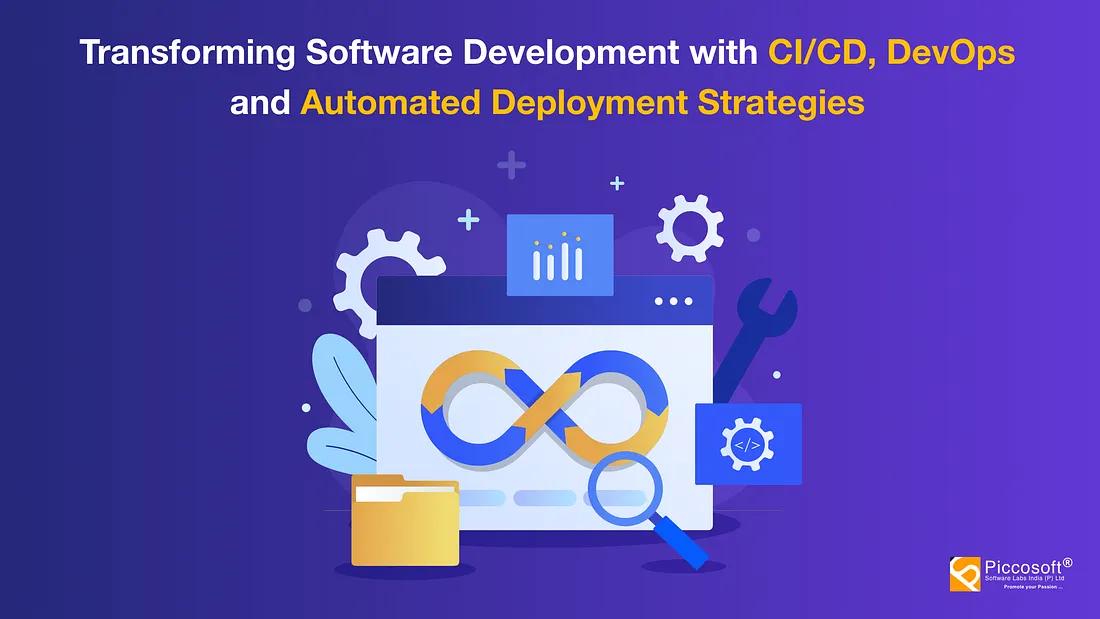
In the ever-evolving landscape of software development, the adoption of cutting-edge methodologies has become a game-changer. Continuous Integration (CI), Continuous Deployment (CD), and the overarching principles of DevOps have emerged as pivotal elements, revolutionizing how software is developed, tested, and deployed. This article delves into the core concepts of CI/CD, DevOps, and automated deployment strategies, exploring how they synergize to enhance efficiency, collaboration, and overall software development processes. Continuous Integration (CI): The Foundation of Collaboration Continuous Integration is the practice of regularly integrating code changes into a shared repository. This process ensures that multiple contributors’ code is automatically merged, preventing integration issues and conflicts. CI promotes collaboration among development teams, accelerates the identification of bugs, and maintains a consistent and reliable codebase. Continuous Deployment (CD): Rapid and Reliable Release Cycles Continuous Deployment takes the principles of CI a step further by automating the entire release process. It involves automatically deploying code changes to production after passing the necessary tests in the CI phase. CD enables rapid and reliable release cycles, reducing the time between code completion and its availability to end-users. This approach enhances software delivery speed while maintaining a focus on quality and stability. DevOps: Bridging the Gap between Development and Operations DevOps, a cultural and collaborative approach to software development, aims to break down silos between development and operations teams. By emphasizing communication, collaboration, and automation, DevOps fosters a seamless integration of CI/CD into the software development lifecycle. It aligns development goals with operational objectives, resulting in faster development cycles, increased deployment frequency, and improved overall efficiency. Automated Deployment Strategies: Streamlining Release Processes Automated Deployment Strategies involve the use of tools and scripts to automate the process of deploying software applications. These strategies complement CI/CD and DevOps by ensuring consistency in deployment, reducing human error, and facilitating rollbacks in case of issues. Whether utilizing blue-green deployments, canary releases, or rolling deployments, automated strategies enhance the reliability and predictability of software releases. Benefits of CI/CD, DevOps, and Automated Deployment Faster Time-to-Market The integration of CI/CD, DevOps, and automated deployment accelerates the software development lifecycle, allowing organizations to deliver features and updates to users faster. Improved Collaboration DevOps fosters collaboration between traditionally siloed development and operations teams, creating a more cohesive and efficient working environment. Enhanced Quality and Reliability Continuous testing and automated deployment strategies contribute to higher software quality, as issues are identified and resolved early in the development process. Scalability and Flexibility CI/CD pipelines and automated deployment strategies are scalable, adapting to the needs of growing and evolving software projects without sacrificing efficiency. Conclusion The integration of Continuous Integration, Continuous Deployment, and DevOps practices, along with automated deployment strategies, represents a paradigm shift in the world of software development. By fostering collaboration, enhancing speed, and ensuring the reliability of software releases, these methodologies empower development teams to meet the demands of an ever-changing digital landscape. In this transformative journey, companies seek partners that understand the nuances of modern software development methodologies. Piccosoft emerges as a beacon in this landscape, offering comprehensive solutions that align seamlessly with the principles of CI/CD, DevOps, and automated deployment.
Continue reading »
More blogs
-

- 1
-
